The Finite Pie
The belief that resources are limited and wealth is zero-sum. In reality, exchange creates wealth. Collaboration beats competition.
Garrett Gunderson
Question the rules. Reclaim your possibilities.
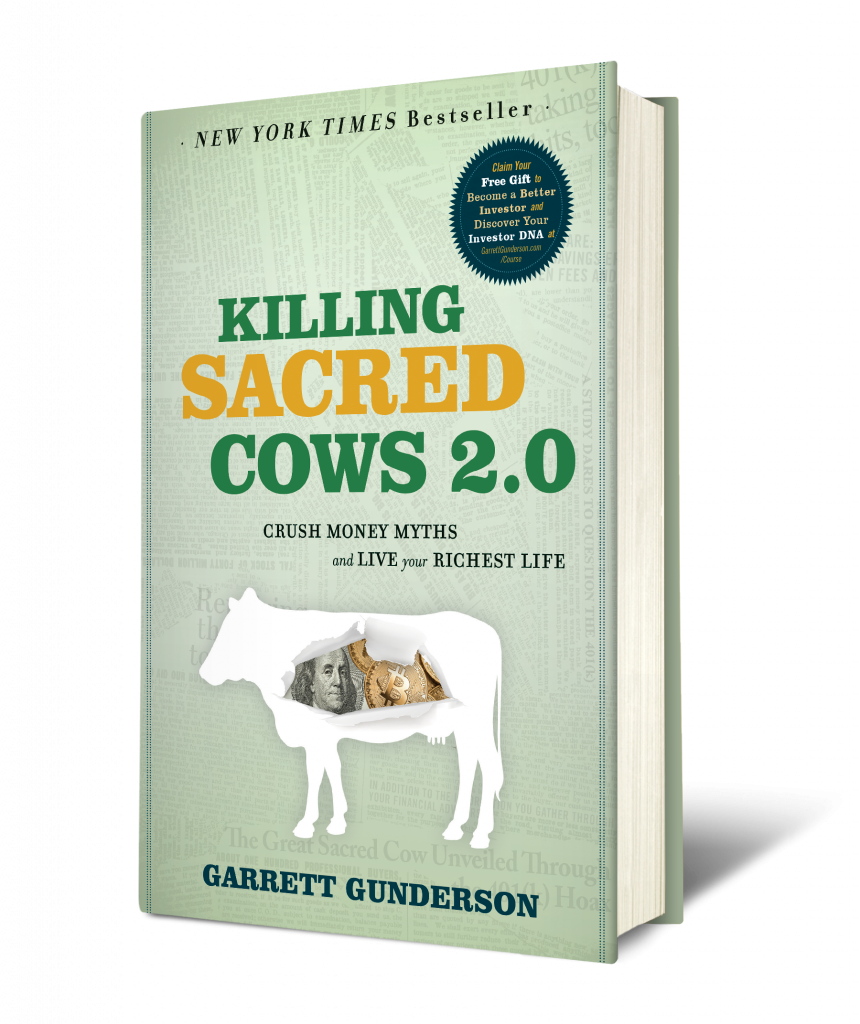
Challenge nine deeply ingrained money myths—from budgeting and retirement to risk and debt. The rewritten 2.0 edition brings new examples, personal stories, and a deeper look at the 401(k).
Inside the book
Most financial advice follows a formula: cut spending, max out your 401(k), ride the market for 30 years, and hope you have enough. I call these “Sacred Cows” — unquestioned beliefs that sound safe but quietly destroy prosperity. In this book, I challenge nine of them:
The belief that resources are limited and wealth is zero-sum. In reality, exchange creates wealth. Collaboration beats competition.
Money isn’t power. It’s a receipt — a by-product of value created by people.
Net worth is meaningless if it can’t create cash flow. Prosperity has more to do with happiness than account balances.
“Set it and forget it” is more dangerous than ever. Wall Street follows cash flow rules for itself but teaches accumulation to you.
Budgeting is like dieting — it creates scarcity and eventually fails. You can’t shrink your way to wealth.
“How in the world does increasing your chance of losing help you win?” Risk is in the investor, not the investment.
There’s no such thing as self-insurance. Either you have insurance or you don’t.
Having a loan and being in debt are two different things. A loan on an asset worth more than the loan is equity, not debt.
True security comes from within — your ability to create value and solve problems. External “security” is an illusion.
This book is for anyone who has followed the mainstream financial playbook and still feels stuck. If you’ve been told to save more, spend less, and wait — and the math still isn’t working — Killing Sacred Cows will show you why. It’s especially relevant for:
By the time you’re done reading, you’ll know more about personal finance than most financial advisors — and that’s no joke. You’ll discover how to take control of your finances now, instead of deferring your life to some distant retirement date.
Expanded and rewritten
The original Killing Sacred Cows was published in 2008. The 2.0 edition is a complete rewrite with:
Reader experiences
I found this to be thoroughly groundbreaking. It does a phenomenal job of tying together value creation and abundance mindset in financial terms.
This book motivated me to be a creator and producer of value. When you strive to create value in the world, money naturally follows.
His premise of value creation and human life value is excellent. YOU are your biggest asset.
I put this book up there with Rich Dad Poor Dad in the amount of aha moments. Great, great read.
This book will get you re-examining your wealth-building philosophy about 401Ks and IRAs. Everyone should be financially responsible and proactive.
The author teaches that happiness equals prosperity, not money! An uplifting book about investing in ourselves and human life value.

Why I wrote it
Our culture is riddled with destructive myths about money and prosperity. I wrote Killing Sacred Cows to challenge the unquestioned beliefs that limit our creativity and financial potential.
I’m a New York Times and Wall Street Journal bestselling author. I grew up in a fourth-generation coal mining family in rural Utah, founded and sold an INC 500 financial firm, and have written 10 books. My work focuses on cash flow over net worth, value creation over accumulation, and building a life you don’t want to retire from.
Garrett GundersonKilling Sacred Cows 2.0
Request your print copy. I’ll send you a shipping quote and a payment link. Your order won’t be processed until payment is received.
A few more answers
What are the 9 myths in Killing Sacred Cows? The nine myths are: The Finite Pie, Money Is Power, It’s All About the Numbers, The Long Haul, A Penny Saved, High Risk = High Returns, Self-Insurance, Debt Is Bad, and Financial Security. Each represents an unquestioned belief about money that Garrett challenges with evidence and alternative strategies.
Is this the same as the original Killing Sacred Cows? No. Killing Sacred Cows 2.0 is a complete rewrite with updated data, new stories, and a bonus chapter on the 401(k). If you read the original, the 2.0 edition has significant new material.
Is Killing Sacred Cows worth reading? It’s a New York Times bestseller with 1,000+ ratings. If you’ve ever questioned mainstream financial advice — the 401(k), budgeting, “debt is bad” — this book provides a direct, evidence-based alternative.
Who should read this book? Entrepreneurs, high-income professionals, and anyone who earns well but doesn’t feel wealthy. If you’re following the accumulation model (save more, spend less, wait 30 years) and it’s not working — this book explains why and what to do instead.