
Billionaires often don’t follow their own advice.
Am I calling them liars? Well, not exactly.
It’s hard for them to tell others what they’re doing, because they don’t believe most people would be willing to think the same way or do the same things. So they give predictable advice.
Easy advice. Simple steps. But it won’t build game-changing wealth.
Because those aren’t the rules they actually play by.
See, it’s more of a “do what they do” than a “do what they tell you” situation.
Case and point: Tony Robbins interviewed over 50 of the most legendary financial minds for his book Money: Master the Game. They told you to buy index funds.
Diversify. Let compound interest do the work.
There’s just one problem.
Not a single one of them got rich that way.
Every billionaire in that book made their money from their business, their fund, or their skills.
The advice they gave you?
That was for people they assumed couldn’t do what they did.
So in this post, I’m going to walk you through five things billionaires actually do with their money.
Things they don’t teach in financial books.
Things they don’t say on CNBC.
And things your financial advisor (if you aren’t working with my firm) has probably never mentioned.
Let’s go.
1. They Own Businesses, Not Index Funds
Ray Dalio. Carl Icahn. Paul Tudor Jones. Jack Bogle.
Warren Buffett. T. Boone Pickens. Charles Schwab.
Almost all of them told the average reader the same thing:
- Buy low-cost index funds.
- Diversify.
- Don’t try to time the market.
- Let compound interest do the work.
Not a single one of them got rich doing that.
This is what I call The Billionaire Blind Spot.
When a billionaire gives advice, they assume you can’t do what they did.
So they give you the lowest-effort, watered-down version.
The version for people who don’t know what they’re doing.
That’s literally what Buffett said about diversification:
“Diversification is protection against ignorance. It makes little sense if you know what you are doing.”
Let’s go through the list:
- Ray Dalio didn’t buy index funds. He built Bridgewater Associates, the world’s largest hedge fund. $160 billion under management. He made $2 billion in a single year.
- Carl Icahn didn’t diversify. He became a corporate raider, buying controlling stakes in companies, restructuring them, and making hundreds of millions per deal.
- Paul Tudor Jones runs a hedge fund. He made his fortune through active macro trading.
- Charles Schwab built a brokerage company. His billions came from the business, not from putting money into a brokerage account like he told readers to do.
- Jack Bogle, the guy who invented the index fund… even he got rich from building the Vanguard company.
Every single one of them built something.
They didn’t sit around for 30 years waiting for compound interest.
It’s like asking Michael Jordan how to be great at basketball and he says, “Just go to the gym and shoot free throws for 30 years.”
That’s not bad advice.
But that’s not what made him Michael Jordan.
What made him great was obsessive skill development, focus, and competing at the highest level.
There was one exception.
One billionaire who didn’t play the game.
Marc Faber. They call him Dr. Doom.
He said something the others didn’t:
“The best investments for you may be in your own education, in the quality of the time you spend with the ones you love, on your own job, and on books, which will open new ideas to you and let you see things from many different perspectives.”
He was the only one who told the truth.
Because that is how they all got rich. They simply don’t do what they tell you to do.
2. They Focus, Not Diversify
Everyone thinks Warren Buffett is a stock market investor.
He’s not.
Warren Buffett is a business buyer.
There’s a massive difference.
Long-Term Returns (1965–2023)
Since Warren Buffett took control of Berkshire Hathaway in 1965, Berkshire Hathaway (BRK.A) returned approximately 19.8% per year, or around 4,300,000%+.
Whereas the S&P 500 (with dividends) returned approximately 10.2% per year, or 31,000%+.
These returns are rounded based on Berkshire’s published annual letters.
What that actually means is…
- $10,000 invested with Buffett in 1965 → over $400 million+
- $10,000 in the S&P 500 → about $3 million
That is a MASSIVE gap.
Buffett didn’t buy shares in a diversified index fund.
He bought companies, and he kept them, such as:
- See’s Candies: bought for $25 million in 1972. Returned over $2 billion. That’s an 8,000% return on a single, focused bet.
- GEICO: bought full ownership for $2.3 billion. Now one of the largest auto insurers in America.
- BNSF Railway: bought for $26 billion. He called it “an all-in wager on the economic future of the United States.” All-in. Not diversified.
- Precision Castparts: $32 billion. The biggest acquisition Berkshire ever made.
- Dairy Queen, Duracell, Fruit of the Loom, and Nebraska Furniture Mart: all owned outright.
Today, Berkshire Hathaway owns a business empire of more than 60 companies.
Buffett was once asked, along with Bill Gates, to each write down one word that represented the key to their success.
They wrote their answers independently.
Both wrote the exact same word:
Focus.
Not diversification.
Not compound interest.
Not patience.
Focus.
Buffett himself said:
“I could improve your ultimate financial welfare by giving you a ticket with only 20 slots in it representing all the investments you get to make in a lifetime. Under those rules, you’d really think carefully about what you did, and you’d be forced to load up on what you really think about.”
Twenty investments in a lifetime.
That’s the opposite of diversification.
What smart companies do
This isn’t just billionaires.
Look at how the smartest companies in the world actually operate.
Does Apple diversify into Microsoft? No.
Apple buys companies and capabilities.
They invest in what they know, what they control, and what they can make better.
Every billion-dollar company operates this way.
But your financial advisor tells you to spread your money across 500 companies you’ve never heard of and pray for the best.
Even worse, we’re in the distraction cycle right now.
- The news scares you about inflation, so you start investing in gold and silver.
- Social media gives you FOMO, so you find yourself in crypto.
- Every financial network tells you now is the time to invest in the market.
Then one major company sells its silver holdings and there’s a crash.
Or crypto tanks due to forces outside your knowledge and control.
I’ve seen untold losses of capital (firsthand and with many friends and family) due to this. It’s a hard lesson to learn, but once you do, you can focus, dial in your Investor DNA, and get better.
3. They Use Velocity, Not Compound Interest
“Compound interest is the eighth wonder of the world.”
Everyone thinks Einstein said that.
He didn’t.
There’s no record of it.
The phrase was coined by a life insurance company in 1916 as a marketing term.
Here’s why compound interest is misleading:
The math assumes a steady rate of return, say 8% every year for 30 years.
Real investments don’t work that way.
They bounce between negative 15% and positive 15%.
If you lose 10% on $100,000, you’re at $90,000.
Then you gain 10%?
You’re at $99,000.
Two “average” years, and you’re behind.
But it gets worse.
The $12.9 million waterfall
If you earn $100,000 a year for 30 years with a 5% growth rate, $12.9 million flows through your hands.
Sounds great.
Now watch:
- Subtract taxes: 40% erosion each year. Down to $7.8 million.
- Subtract loan interest (mortgage, car, etc.): another 35% each year. Down to $2.9 million.
- Subtract lifestyle: you’re left with $216,000.
$12.9 million turned into $216,000.
And according to Vanguard, the average 401(k) balance is around $148,000.
Another way to look at it is, if you doubled your return from 5% to 10% on the average retirement plan balance, you’d go from $640,000 over 30 years to $2.58 million.
But with the standard 1% advisory fee, you’d only have $1.96 million, costing you more than half a million dollars.
However, if you plugged the leaks (taxes, fees, interest, and insurance inefficiency) at the same 5% rate, you’d have $2.7 million.
Zero additional risk.
More money, tax-free, than doubling the return with compounding.
Because there are no guaranteed ways to double that return, why not keep more of what you make with a little financial savvy?
If you want a quick baseline before changing strategy, run the free Money Snapshot tool on X1 Wealth. It’s a practical way to find where cash is leaking right now.
The Velocity Gap
Your bank doesn’t believe in compound interest. Think about that.
The bank takes your deposits and lends that money out.
- If they pay you 3% and charge 6%, that’s a 100% markup.
- They tell you to compound at 10%.
They tell you it takes money to make money.
Yeah…
Your money for them to make money.
The rules of compound interest work beautifully for institutions:
- They want your money.
- They want it all the time.
- They want it for as long as possible.
- They want to give you as little as possible when you withdraw.
You wait. They cash flow.
You sit. They earn the spread.
Do they believe high risk equals high return?
No.
They find ways to reduce risk while telling you to take more.
If you get a home loan, they want a down payment.
They charge PMI (private mortgage insurance), make you pay for an appraisal, check your bank balances, credit score, and taxes.
They reduce their risk at every turn.
Then they tell you to ride the stock market rollercoaster because “over the long run, the market always goes up.”
Rules for you, not for them.
They don’t do what they tell you to do.
Want to see how this math shifts when you run a real system instead of generic advice?
Free Training Details the Exact Wealth Operating System I Used… That You Can Use To Find Financial Freedom In Years, Not Decades
4. They Compound Knowledge, Not Money
Here’s what billionaires know that you can learn from.
Not everyone is meant to be a billionaire.
But that doesn’t mean you can’t grow once you see pieces of how they think.
What’s more powerful:
- Cash flow or compound interest?
- Key relationships or money in a retirement plan?
- The ability to create and add value, or waiting 30 years for an account to grow?
The answer is obvious when you say it out loud.
But the financial industry has spent decades convincing you otherwise.
The human capital advantage
Your greatest asset isn’t your 401(k).
It’s you.
Your knowledge.
Your skills.
Your relationships.
Your ability to create value.
Compound interest grows money at 8%, maybe 10%.
Compounding your skills by getting better at what you do, solving bigger problems, and serving more people compounds at 100% or even more.
There’s no cap.
And you don’t have to wait 30 years.
Marc Faber was the only billionaire in Robbins’ book who gave you the real playbook.
The best investment is in your own education, your own work, and the people you love.
In 2008, when most people I knew declared bankruptcy, you know what saved me?
Not a 401(k).
Not compound interest.
Not a diversified portfolio.
My skills, relationships, and ability to create value.
My bank account temporarily went to zero.
But my knowledge, my character, my relationships, that’s what rebuilt everything.
No index fund does that.
From Survival to Millions
My friend Dan Martell, from ages 11 to 17, told me he was lucky to stay alive.
But at 17, he started coding.
He made enough for paycheck-to-paycheck living.
His first taste of abundance.
He invested in a seminar, and everything changed.
He built and sold multiple software businesses.
He created a venture fund.
He wrote Buy Back Your Time.
His wealth came from compounding his skills, not compounding his dollars.
If you planted a fruit tree and someone told you, “Don’t touch it for 30 years, and eventually you’ll get fruit,” you’d say that’s insane.
You’d want fruit this year.
And next year.
Better fruit.
Then the year after that, you’d want to plant more trees.
That’s what compounding knowledge does.
It bears fruit now.
Compound interest asks you to plant the tree, walk away, and come back when you’re 65.
By then, half the fruit is rotten from fees and taxes.
Compound your skills, not just your savings.
Compound your relationships, not just your returns.
5. They Create Cash Flow and Enterprise Value
Here’s what I call 3-Dimensional Investing.
The best investments do three things at once:
- Create cash flow.
- Build equity.
- Have tax advantages.
That’s the trifecta.
91% of people worth $5 million or more own a business.
That’s where the wealth comes from.
Meanwhile, you can have $1.5 million in a retirement account and still need Social Security to get by.
I’ve seen it happen.
People with a million-dollar retirement account and a paid-off home, but not enough cash flow to create a quality lifestyle.
They learned to create net worth but can’t craft cash flow.
According to Northwestern Mutual’s 2024 Planning & Progress Study, only one in three American millionaires (32%) consider themselves “wealthy.”
Nearly half say their financial planning needs improvement.
Millionaires.
On paper, they won.
In reality?
Inflation ate their purchasing power.
Locking money away didn’t train them how to create income from it.
Buy, Borrow, Die: The Billionaire Tax Playbook
This is how the truly wealthy access their money without paying a dime in tax:
- Buy appreciating assets: businesses, real estate, equities. Hold them. Don’t sell. If you don’t sell, there’s no taxable event.
- Borrow against those assets. Loans aren’t taxed. So instead of selling stock and paying capital gains, you take a loan using the stock as collateral. You get the cash, the asset keeps growing, and the IRS gets nothing.
- Die, and your heirs receive a stepped-up basis. All that appreciation is wiped clean from a tax standpoint. The loan gets repaid, often through life insurance, and the wealth transfers to the next generation without ever being taxed.
That’s how Buffett, Bezos, and Musk live on billions without taking a salary.
The more cash flow that comes in without their direct involvement because they built a system, had leverage, and money keeps moving even when they don’t work, the more enterprise value they create.
The Lifestyle Investor
My friend Justin Donald and I were both impacted by the book Flash Boys.
We discovered that only 8% of managed funds outperform indexes after 20 years.
Instead of diversifying more, Justin did the opposite.
He focused.
He bought three mobile home parks.
The first one replaced his wife’s income.
The second covered survival expenses.
The third covered lifestyle.
It didn’t take 30 years.
It didn’t take scrimping or sacrifice.
It took focus and cash flow. 3-Dimensional Investing. Tax benefits. Equity. Cash flow.
That’s what the wealthy build.
Not a pile of money gathering dust in an account.
A system that generates income, grows in value, and stays tax-efficient.
The Billionaire Alignment Test
Here’s something fun you can do…
It’s five simple questions.
Answer honestly, and this will tell you whether you’re following the billionaire playbook, or the one they wrote for everyone else.
- Where does most of your investable money go? Does it go into things you own and control, or into accounts managed by strangers? If it’s strangers, you’re playing the game they designed for people who “don’t know what they’re doing.” Buffett’s words, not mine.
- Are you compounding your skills and knowledge every year, or just your savings? When’s the last time you invested in yourself: a coach, a book, or a skill that made you better at what you do?
- Do you have recurring cash flow income from things you’ve built, or are you waiting on a number in an account? Cash flow means you’re independent and free to swing for the fences with your vision.
- Are you focused or diversified? Buffett and Gates both wrote the same word: focus. If your money is spread across 47 different funds you can’t name, ask yourself who that strategy benefits.
- Have you plugged your financial leaks? Are you saving on taxes, not just deferring them? Are you paying more interest than you need to? Do you have investments sitting there underperforming while charging fees?
If three or more of those landed wrong, you’re not behind.
You’ve just been following the wrong playbook.
The one they wrote, not the one they use.
The Real Billionaire Playbook
Not everyone needs to be a billionaire.
Not everyone wants to be.
But here’s what you can take from this:
The wealthiest people on earth don’t wait 30 years for compound interest.
They compound their:
- knowledge.
- skills.
- relationships.
They focus instead of diversifying.
They create cash flow instead of chasing net worth.
They own instead of rent.
If you own a business, you are a better investment than any index fund, any 401(k), any crypto coin, or anything that can be manipulated, take your time, or steal your peace of mind.
The real answer?
That simple. And that hard.
They don’t do what they tell you to do.
Now you know what they do.
The question is: what are you going to do with it?
In prosperity,
Garrett
Ready to Build Your Life of Financial Freedom?
Most entrepreneurs are either trying to do everything alone or working with disconnected advisors who don’t talk to each other. Without coordination, your mental capital stays trapped. Your relationship capital stays untapped. And money keeps slipping through the cracks.
This isn’t traditional financial planning. It’s not about locking money away or chasing net worth. It’s about being financially fit, independent, and free. Building mental capital through expert guidance. Multiplying relationship capital with a vetted community of entrepreneurs. Creating cash flow that supports life today while building for tomorrow.
If you’re a business owner generating about $350,000+ per year and want direct support building your own family-office strategy, apply here for your personalized Report of Findings.

Frequently Asked Questions
Do billionaires actually invest in index funds?
Most don’t. Tony Robbins interviewed over 50 of the world’s top financial minds for Money: Master the Game, and they all recommended index funds. But not a single one built their wealth that way. Ray Dalio built Bridgewater. Charles Schwab built his brokerage. Jack Bogle, the inventor of the index fund, got rich from building Vanguard. They built businesses, not portfolios.
What is the Buy, Borrow, Die strategy?
It’s the tax playbook used by billionaires like Buffett, Bezos, and Musk. Step one: buy appreciating assets and hold them (no sale means no tax). Step two: borrow against those assets instead of selling them (loans aren’t taxable income). Step three: when you die, heirs receive a stepped-up basis that wipes out the capital gains tax. The loan gets repaid, often through life insurance, and wealth passes to the next generation tax-free.
Is compound interest really the eighth wonder of the world?
Einstein never said that. There’s no historical record of it. The phrase was coined by a life insurance company in 1916 as a marketing term. More importantly, compound interest math assumes a steady return rate, but real investments bounce between gains and losses. If you lose 10% then gain 10%, you’re still behind. Banks don’t use compound interest on their own money. They use velocity: lending your deposits out and earning the spread.
What is 3-Dimensional Investing?
It’s when a single investment does three things at once: creates cash flow, builds equity, and provides tax advantages. Owning a business or income-producing real estate often checks all three boxes. Compare that to a retirement account that only compounds (maybe) and locks your money away for decades.
What is the Billionaire Blind Spot?
When billionaires give financial advice, they assume you can’t do what they did. So they give the lowest-effort, watered-down version: “buy index funds and wait.” Warren Buffett said diversification is “protection against ignorance.” The advice they give is for people they assume don’t know what they’re doing. The real playbook is to focus, build ownership, and compound your skills instead of just your savings.
More Free Resources
If you want to keep building momentum, start with one of these free book resources:
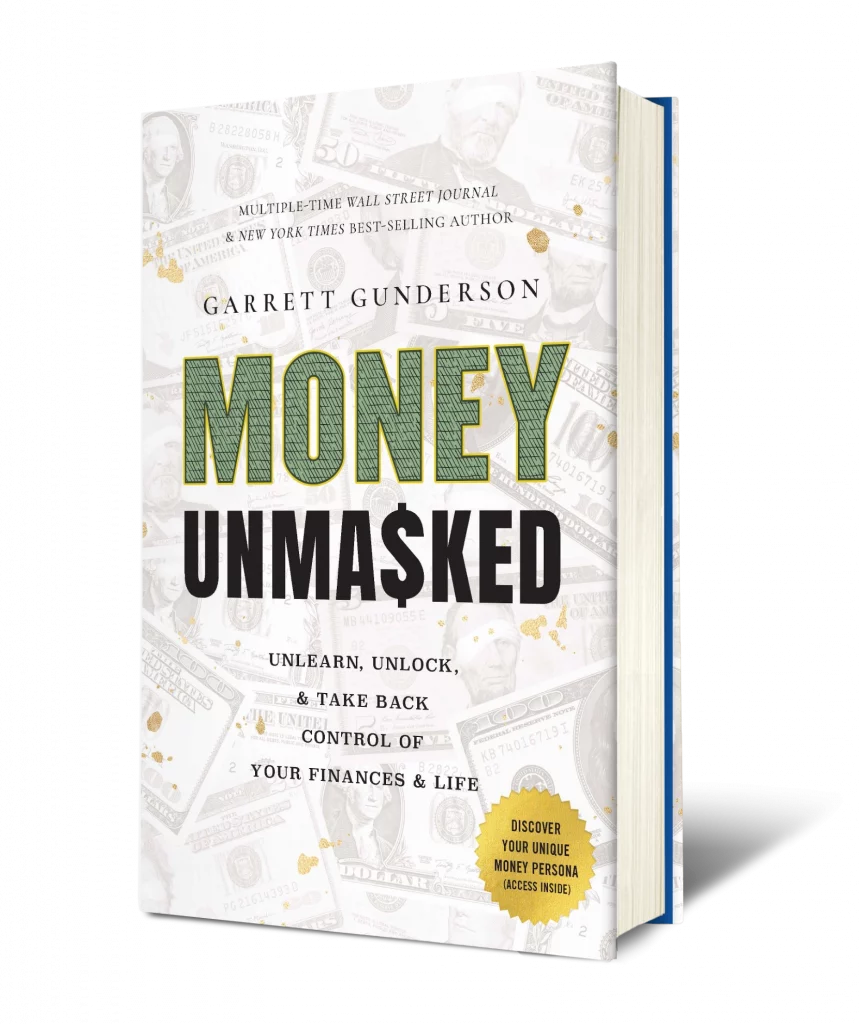
Money Unmasked
Get the free audiobook and reframe the money patterns driving your decisions.
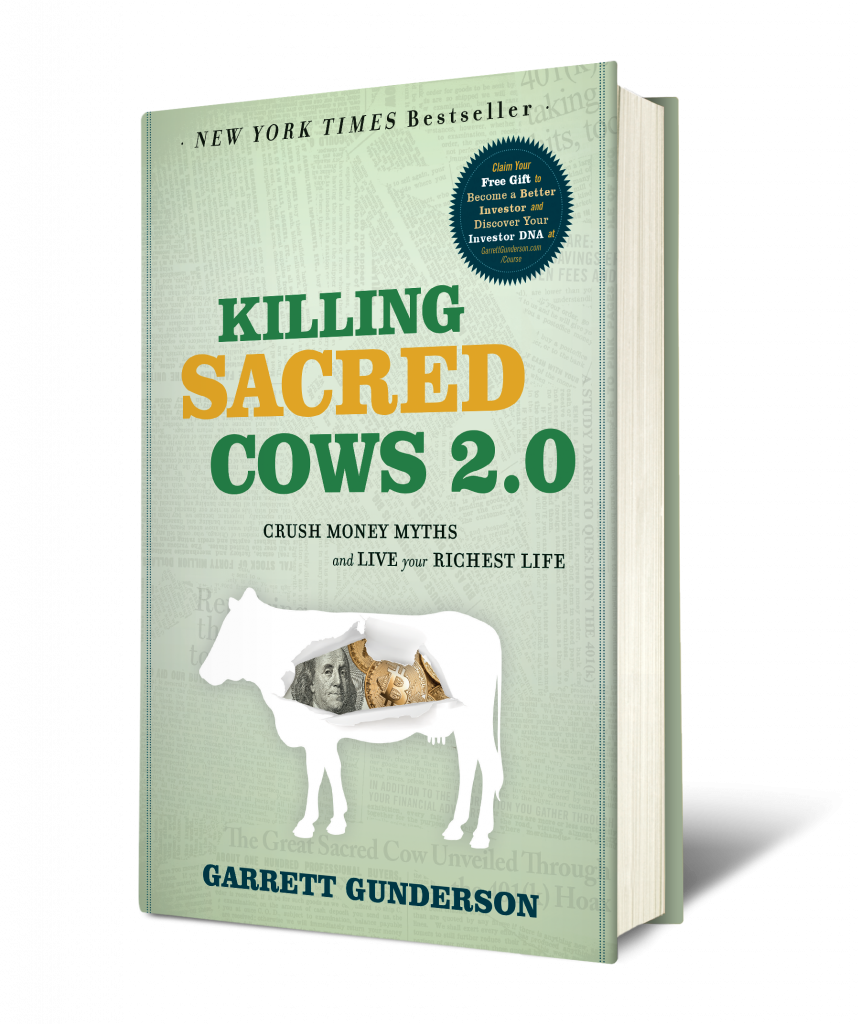
Killing Sacred Cows
Get the free book and break the financial myths that quietly keep entrepreneurs stuck.