Everybody wants to know where to invest their money. And almost every entrepreneur is looking in the wrong place.
Is it the stock market, crypto, and/or gold? No. Not exactly.
These may actually be distractions disguised as opportunity, and that is something far more dangerous than bad investments.
The Distraction Economy Is Designed to Steal Your Focus
Every morning you wake up to a new financial emergency. Gold is surging. Bitcoin is crashing. The stock market lost 800 points. AI is going to take your job. Some guru on YouTube says you need to buy silver before the dollar collapses.
And every morning, you lose fifteen minutes, thirty minutes, an hour of your life consuming noise that has zero bearing on your most substantial wealth.
The Distraction Economy.
It’s fear packaged as information, bundled as opportunity, and delivered directly to the one person who can least afford to lose focus: you.
The business owner. The person whose highest-return investment is sitting in the chair right now, reading this.
Andrew Carnegie said it best.
“Put all your eggs in one basket, and then watch that basket.”
— Andrew Carnegie
He didn’t build a conglomerate of random businesses. He built one thing, steel, and became the richest man in America. Carnegie refused to scatter. While his peers dabbled in railroads, oil, and banking, he poured everything into dominating a single industry. That focus made him unstoppable.
Carnegie’s entire fortune came from knowing his business better than anyone alive. He didn’t need to diversify because he wasn’t ignorant about what he owned. He understood every furnace, every cost, every contract. That knowledge was his edge, and it’s the same edge you have in your business right now.
Amazon didn’t become a trillion-dollar company by buying shares of Walmart. For over twenty years, Jeff Bezos poured every dollar of profit back into fulfillment centers, AWS, and Prime.
Wall Street complained that Amazon “wasn’t profitable.” That’s because Bezos wasn’t trying to harvest, he was trying to grow. He invested in his own capability, not somebody else’s stock ticker. Smart companies invest in themselves. Why wouldn’t you? If you want a deeper dive on this principle, read Stop Chasing Money, Start Building Capital That Counts.
Here’s the pattern nobody wants to admit: the people telling you where to put your money made their money doing something completely different. Dave Ramsey didn’t get wealthy by following the debt snowball and investing in mutual funds. He got wealthy by building a media empire. Suze Orman was exposed for having only about 5% of her money in the stock market she tells everyone to trust. Tony Robbins wrote MONEY: Master the Game (2014), a 688-page love letter to index funds, yet built his fortune from events, coaching, and business ownership. Not a single index fund.
They don’t do what they tell you to do.
Distractions. Disguised as opportunity.
I Was the Poster Child for Distraction
I know what it costs because I lived it.
By 2007, I had built my net worth to $8 million. On paper, I looked brilliant. Oil and gas deals. Two IPOs. Over 100 rental properties. A hard money lending fund I started myself. Partnerships scattered across multiple states. I had what every financial magazine would call a “well diversified portfolio.”
I also had what no magazine would print: gray hair at 30, weight gain due to stress, interrupted vacations, constant phone calls from partners and property managers, and maybe even feeling my family would be better off without me.
Let me walk you through how I got there. My first three real estate deals all won. A $96,000 townhome that appreciated nicely. A $25,000 escrow deposit that gave me back $50,000 three months later. A $190,000 property I picked up with zero down. And made 90k three years later. Three for three. I thought I was good at real estate. What I was good at was being lucky during a housing boom.
That false confidence led me to 100+ properties. Each one needed attention, management, capital, and time. Meanwhile my oil and gas deals needed research, they wanted me to keep making more deposits not sending money to me. The IPOs needed tracking. The lending fund needed oversight. Every dollar I’d “diversified” into demanded a piece of my brain that should have been focused on growing my core business.
Then 2008 happened. My net worth collapsed from $8 million to almost nothing. Partners went bankrupt. I was left holding the bag for money and management. I had to borrow money from my mother-in-law to pay for my son’s speech therapy. I rode a bike to the gym to save gas. I added water to shampoo bottles to squeeze out the last drops.
I thought I was being smart. Diversified. Multiple streams of income. In reality, I had multiple streams of distraction. Every one of them pulled me further from the thing I was best at: building my business, serving my clients, growing my value.
My friend Shon Wilson taught me this lesson the hard way. During those same ten years when I was juggling investments across seven different categories, Shon was focused. One business. One mission. One lane. And even though I had more money at my peak, he kept his money and had time to work on his jeep and hang with friends. Ultimately, he did much better than me financially over that entire decade. Focused. Not distracted.
Focus beats scattering your money around. Every time.
If this resonates, ask yourself: Where are you overworked right now?
Is it because your money is locked up in retirement plans you can’t influence, scattered across investments you don’t understand, or tied up in “opportunities” that steal your energy? Run the free Income Asset DNA tool to see where your money should go based on who you are, not what some guru is selling this week.
Your Business Is the Investment. Everything Else Is a Hedge.
Here’s what I believe, and it’s a position almost no one in personal finance will take (because it doesn’t pay them): your business is your wealth engine. Period. It deserves the vast majority of your financial energy, your attention, and your capital.
This doesn’t mean you dump every dollar back into your business without a plan. Businesses have an insatiable appetite. There will always be more to spend money on. And it’s dangerously easy to let money get lost in the business if you aren’t intentional about paying yourself, if you aren’t converting business wealth into personal wealth.
But the core principle stands. You take calculated risk in your business because that’s where you have influence. That’s where you have knowledge. That’s where your Mental Capital (your skills, frameworks, and judgment) multiplied by your Relationship Capital (trust, reputation, and your network) and that is what creates your Financial Capital. That’s the Value Equation. And it compounds faster inside your business than it ever will inside somebody else’s fund.
Free Training Details the Exact Wealth Operating System I Used… That You Can Use To Find Financial Freedom In Years, Not Decades
The Value Equation in Real Numbers
Mental Capital × Relationship Capital = Financial Capital
Here’s a simple example.
- Mental Capital: You improve your sales skill from a 6/10 to an 8/10 and raise your close rate from 20% to 30%.
- Relationship Capital: You build referral partnerships with 3 centers of influence who each send 2 qualified leads per month.
- Financial Capital: At a $15,000 offer, that extra 10% close rate on 24 referred leads adds roughly 2.4 new clients, or about $36,000 in added revenue per month.
This is why your highest-return investment is often the business capability that multiplies every lead and every relationship you already have.
Let me give you some examples:
Brad was an anesthesiologist. Dad of three, youngest was four months old when he joined our program. His money was scattered across five different institutions with no coordination between them. Paying hundreds of thousands in taxes. No strategy. No team. Just a collection of accounts that looked “diversified” on paper and felt like chaos in real life.
Within six months, Brad had…
- coordinated team
- consolidated accounts
- properly structured whole life insurance
- cost segregation that unlocked over $500,000 in deductions
- and a transition from W-2 to 1099 that gave him the freedom and the tax efficiency he’d been missing for years.
Brad didn’t need a better stock pick. He needed coordination. He needed someone to help him stop scattering and start focusing.
Dale Clarke grew up eating peanut butter and Miracle Whip sandwiches. (Not the gourmet childhood.) He was obsessed with cutting costs because that’s what he learned growing up. When he flipped from scarcity thinking to cash flow thinking, when he stopped trying to shrink his way to wealth and started producing, he achieved economic independence in 362 days. Dale now makes ten times the income he made before and lives in his dream home. Not because he found the right stock. Because he found the right focus.
Tom Martin was a reader of my book Killing Sacred Cows. His parents grew up during the Depression and passed down a scarcity mindset so deep that Tom thought spending $1.25 on a cup of coffee was irresponsible. After he shifted his relationship with money, after he gave himself permission to invest in growing his value instead of hoarding his pennies, his revenue increased five times over during the worst market conditions in 70 years.
You can’t shrink your way to wealth. You grow your way there.
Distractions. Disguised as opportunity.
The 2020 Lesson: Boredom Is Expensive
In 2020, I wasn’t happy with my business. I didn’t have a clear model or a mission that lit me up. So I did what bored, aimless people with money do: I got distracted.
NFTs. Ethereum. A second cabin. I threw money at things that felt exciting in the moment because I didn’t have a vision pulling me forward.
I started measuring my net worth instead of building my value. And when you measure net worth without a model and a mission, money gets sloppy. People sell you their story because you haven’t fully developed yours. Your mission, your vision, your movement.
Here’s the uncomfortable truth: without a business you love, without a life you’re building toward, you become a target for every shiny investment pitch on the internet. Gold bugs, crypto evangelists, real estate gurus, AI hype merchants. They all sound compelling when you’re bored and directionless.
Jessica Fay learned this from the other side. She built a successful chiropractic practice but felt empty by 2019. She was grinding, producing, winning on paper. Then COVID forced her to step back. She rediscovered hobbies. She found breathing room.
And she had her most profitable year during the pandemic. By working less.
(Read that again if you need to.)
The answer to “where should I invest my money” isn’t a ticker symbol or an asset class. It’s a mirror. It’s a question: Am I building something I believe in? Or am I throwing money at distractions because I haven’t done the deeper work?
What Real Investment Looks Like (It Won’t Make Headlines)
Gold may go up in value. But will you?
Bitcoin may come back in a big way and create returns. But at what cost? Can you handle the volatility? How much time will you spend watching charts, reading Reddit threads, checking Coinbase, and losing sleep over a price you can’t influence?
Here’s what I invest in now, years after my diversification disaster:
- I grow my business by hiring great people
- I build infrastructure
- I focus on the mission, the movement, and on creating more value that leads to more cash flow that serves more people.
- Each quarter I have a theme to focus on a new valuable skill.
How can I add more value, how can I be more valuable?
Then I take a portion of that income and put it into properly structured, optimally funded whole life insurance. This likely won’t beat the stock market long term. But my business will. I know the money in whole life is safe, guaranteed, available, and protected from financial predators and market downturns. It gives me peace of mind. It allows me to keep investing aggressively in my business while converting business wealth into personal wealth that nobody can touch.
Sure, I have a small amount of gold and silver, and some Bitcoin. But that’s a hedge. Not my main strategy. I don’t watch the news cycle around it. I don’t follow the price. It sits there quietly while I focus on what moves the needle.
Here are the investments I made this year that will never show up on a balance sheet:
I hired a house manager who cooks for me. That bought back three hours every day. Three hours I used to write the words you’re reading right now.
I hired a video director and editors so I can focus on getting better on camera and giving more value to my audience instead of spending my afternoons in Final Cut Pro.
I hired a coach to improve my on-screen delivery. A skill investment that compounds every time I press record.
I hired an AI expert for my team, and my creative director is teaching me how to use AI tools to remove mundane tasks, get more efficient, and add more value. Not to replace my team. To free them.
These are the investments I’m talking about. Capability. Efficiency. Impact. These are productive expenses, not costs. They make me more valuable tomorrow than I am today. No index fund does that.
What’s the one area of your business that, if improved, would change everything?
What’s the one hire that would buy back your time and multiply your output?
Solve Your Constraints Instead of Chasing Returns
In February 2025, my business didn’t have a real sales process. We were getting leads but not converting them effectively into Multiplier members at the rate we would like. That was a constraint. An expensive one.
Instead of ignoring it and buying more Bitcoin to “make up the difference” (the move most people make), we solved it. We built a Discovery Session and Report of Findings process that now converts at 70%.
More value for the prospect. Better conversion for us. A constraint turned into a competitive advantage.
What are your business constraints right now? Because constraints aren’t problems. They’re ingredients. They’re the recipe for becoming more valuable.
Where are you holding too tight to your money, stowing it away in a retirement plan you can’t influence that doesn’t create cash flow? Why not take that energy and buy back your time? Invest in a skill that would let you add far more value? Compound your knowledge and grow your business instead of “de-worse-ifying” across things you don’t understand?
The math isn’t complicated. If you earn $500 an hour in your business and you’re spending 10 hours a week managing outside investments that return 8% on $200,000, that’s $16,000 a year in investment returns. But the 10 hours you lost is worth $260,000 in your business. You traded $260,000 in production for $16,000 in returns.
The Focus ROI Test
Use this quick formula before you chase any outside return:
Focus ROI Test = (Hourly Value × Hours Recovered per Year) – Outside Return
In this example:
- Hourly Value × Hours Recovered per Year = $500 × (10 × 52) = $260,000
- Outside Return = 8% × $200,000 = $16,000
- Net Focus Advantage = $244,000
If your Net Focus Advantage is positive, your next best move is not a new ticker symbol. It is removing the constraint inside your business.
That’s not diversification. That’s destruction. I break this same principle down in My Favorite Asset, because your biggest return still comes from increasing your value.
Here’s something I learned the hard way: if your money goes up but your ability doesn’t, you will have risk you can’t see. You won’t understand why things feel fragile. Your future will be in the hands of something you can’t influence.
But if your ability goes up, your money follows. And you’ll know why.
The Fear Under the Distraction
Let’s talk about what’s really going on here. Because the Distraction Economy isn’t just about bad information. It’s about fear.
Fear that your business might fail. Fear that you might make a mistake. Fear that you’re falling behind because someone on Twitter turned $500 into $50,000 on a meme coin. Fear that AI is going to replace you and your skills won’t matter.
And here’s what fear does to smart people (this comes from 25 years of watching it up close): when you feel overwhelmed, you make bad choices. You try to make up for lost time, you hand your money to someone else because you’re afraid of making mistakes on your own. You ignore your intuition. You become vulnerable to greed dressed up as opportunity.
FOMO is the most expensive emotion in finance. It makes you buy things you don’t understand, at prices you can’t justify, with money you can’t afford to lose. And it always pulls you away from the one investment with the highest return: yourself.
You will make mistakes. That’s part of the process. You adjust. You learn. You grow. That’s true for your business, your skills, and your life. The goal isn’t to avoid all mistakes. The goal is to make your mistakes in the arena where you have the most knowledge, the most influence, and the fastest feedback loop. Your business.
People stay stuck because they’re creating a future based on what they know and have right now. Grow into your vision. Allow others to support you. Hire the coach. Join the program. Get the mentor. Let the team carry the weight you’ve been shouldering alone.
At first, AI might feel intimidating. But I hired an expert, my creative director is brilliant with it, and now I’m growing my capability every week. I’m showing the attorney and CPA I am partnering with how we can reach more people, add more value, be even more efficient, and lower prices. That’s the investment. Not a ticker symbol. A skill.
You Don’t Have to Chase the Next Big Thing
Not everyone wants to build a billion-dollar company. Not everyone needs to. You don’t have to beat the S&P 500 or time the gold market or understand blockchain to build real wealth.
But here’s what you do need: clarity about what you’re building and why. A business that grows because you’re growing. Cash flow that comes from value creation, not speculation. And a simple, boring strategy for turning business wealth into personal wealth so your money is safe, available, and protected while you keep doing what you do best.
That’s it. That’s the whole strategy.
Stop watching the news like it’s going to reveal where to put your money. Start looking at your own business like the asset it is. What constraint, if solved, would double your revenue? What hire, if made, would buy back twenty hours of your week? What skill, if learned, would let you serve twice as many people?
Those are the investment questions worth asking. If this hits home, read Stop Building Wealth, Start Living Healthy for the quality-of-life side of this same framework.
If you want the full framework for how I structure my personal wealth outside my business, grab my free book What Would the Rockefellers Do?, it breaks down the exact system I use to convert business income into wealth that’s safe, available, and protected.
Ready to Stop Guessing With Your Money?
Most financial advice tells you to save more and spend less. That’s a losing game. Garrett’s free book Killing Sacred Cows reveals why the conventional wisdom is costing you, and what to do instead.
Do it yourself? Try the free Income Asset DNA on X1 Wealth.
In prosperity,
Garrett
Ready to Build Your Life of Financial Freedom?
Most entrepreneurs are either trying to do everything alone or working with disconnected advisors who don’t talk to each other. Without coordination, your mental capital stays trapped. Your relationship capital stays untapped. And money keeps slipping through the cracks.
This isn’t traditional financial planning. It’s not about locking money away or chasing net worth. It’s about being financially fit, independent, and free. Building mental capital through expert guidance. Multiplying relationship capital with a vetted community of entrepreneurs. Creating cash flow that supports life today while building for tomorrow.
If you’re a business owner generating about $350,000+ per year and want direct support building your own family-office strategy, apply here for your personalized Report of Findings.

Frequently Asked Questions
Where should I invest my money if I’m a business owner?
Start with your business. Put money into people, skills, and systems that remove constraints and multiply output. Then move a defined portion of cash flow into personal wealth vehicles that are safe, available, and protected.
Is it wrong to invest in gold, Bitcoin, or the stock market?
Not as a hedge. I own small amounts myself. The problem starts when outside assets become your main strategy or steal focus from the business that creates your highest return.
What is the Focus ROI Test?
Use this formula: (Hourly Value × Hours Recovered per Year) – Outside Return. If the number is positive, your best next move is to remove business constraints, not chase another outside investment.
How do I convert business wealth into personal wealth?
Pay yourself first and consistently. Move a defined percentage of business income into a personal wealth structure that protects liquidity and lowers exposure to market swings and legal risk.
How do I know if I’m being distracted?
Ask one question: is this move making me better at what I do, or pulling me away from it? If you are checking prices daily on things you cannot influence, that is likely distraction dressed up as opportunity.
Distractions. Disguised as opportunity. Or your business, your skills, your life. The choice is yours.
So let me ask you one question: what would change if you invested in yourself with the same intensity you’ve been investing in things you can’t influence?
More Free Resources
If you want to keep building momentum, start with one of these free book resources:
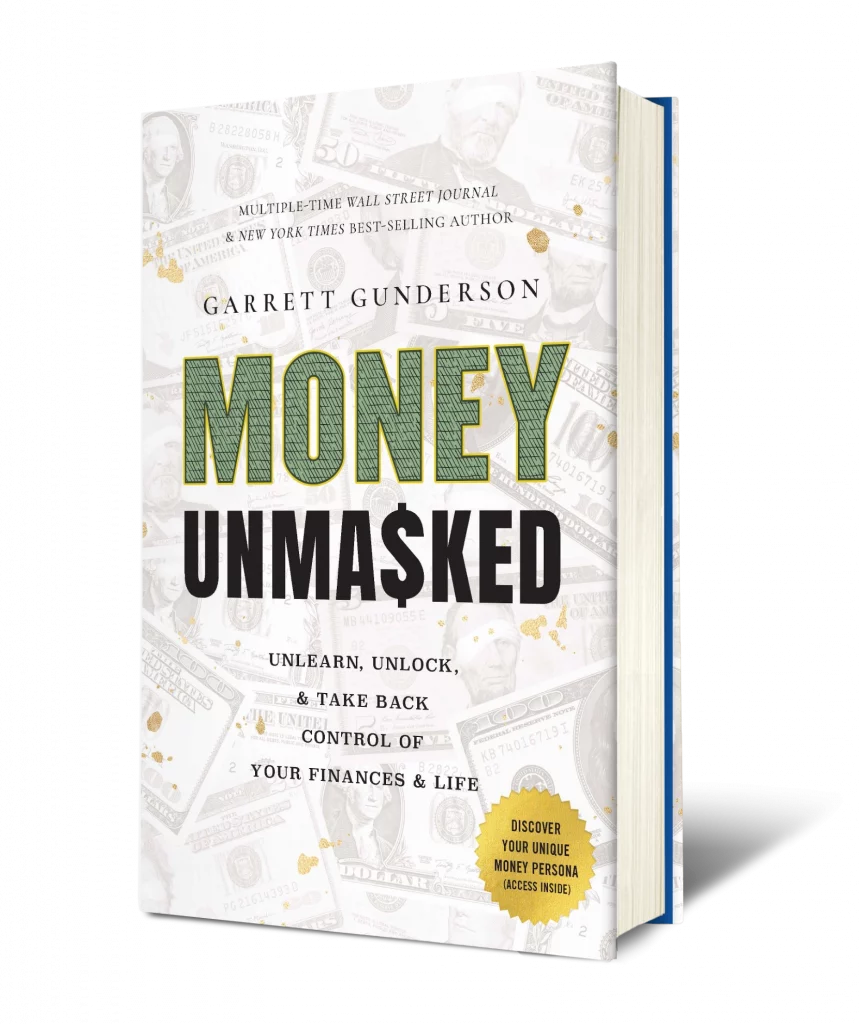
Money Unmasked
Get the free audiobook and reframe the money patterns driving your decisions.
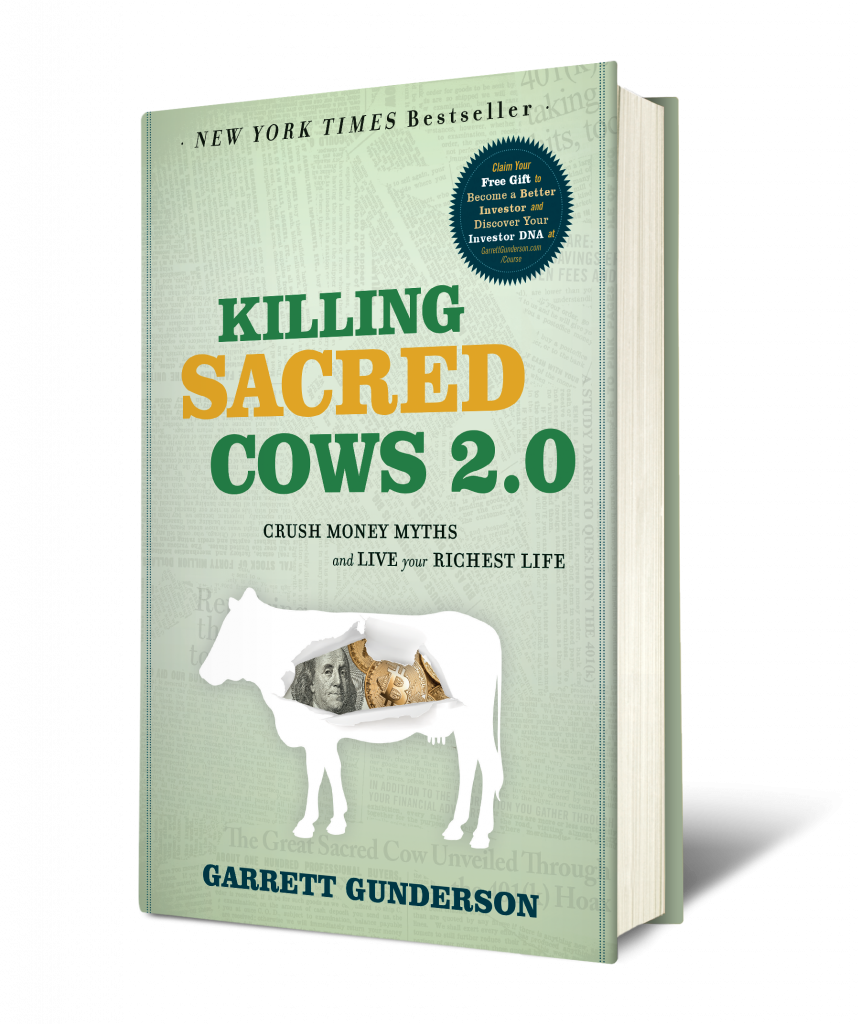
Killing Sacred Cows
Get the free book and break the financial myths that quietly keep entrepreneurs stuck.