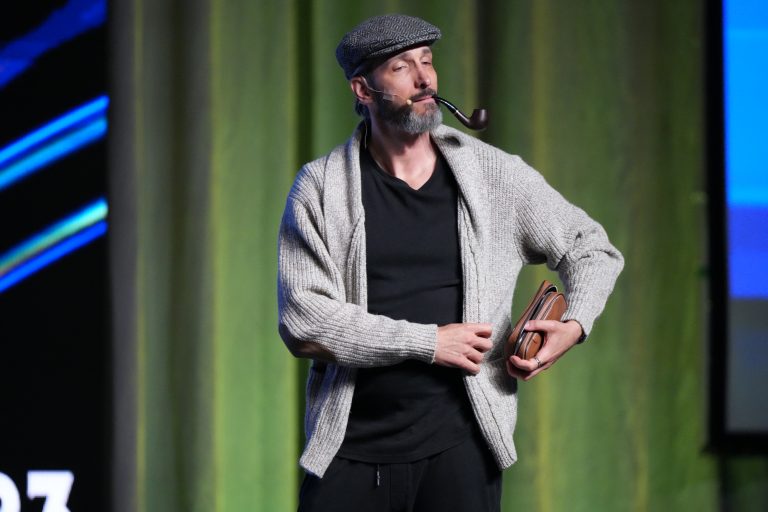
I once lost $8 million chasing investments outside my business.
Rental properties. Oil and gas deals. Crypto. IPOs. More than 100 doors across multiple states. I had my fingers in everything and my focus in nothing.
Then 2008 happened. And I learned the most expensive lesson of my life:
I confused being lucky with being good.
That single realization changed everything about how I invest, how I coach, and how I think about building wealth. Because the problem wasn’t the market crash. The problem was me, spreading my money, my time, and my mental energy across a dozen things I barely understood, while my actual business sat there starving for the attention it deserved.
Compounded knowledge outperforms compounded interest. And once you understand why, you’ll never look at your portfolio the same way.
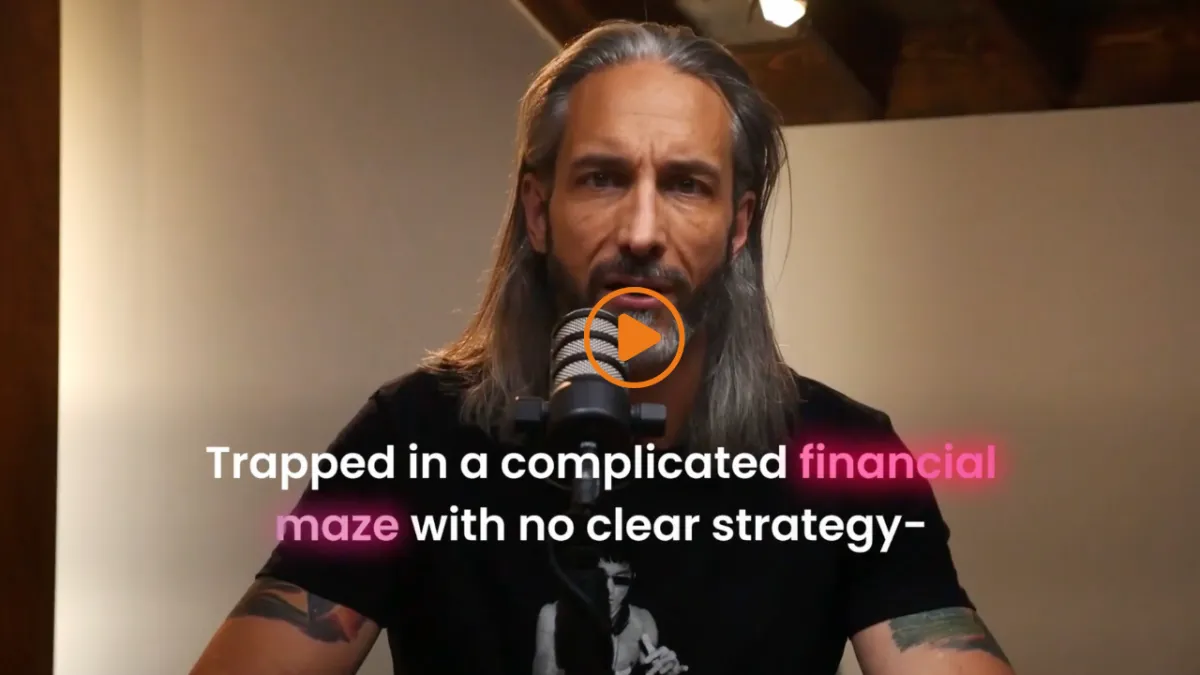
Here’s a video with a deep dive on this, or keep reading for more…
The Noise Tax: How Financial Media Steals Your Best Asset
There’s a hidden cost that doesn’t show up on any brokerage statement. I call it The Noise Tax.
It’s the price you pay, in attention, focus, and mental bandwidth, every time you check your Coinbase app, scroll through market headlines, or read another article about whether the Fed is about to raise rates. That time and energy isn’t free. It comes directly out of your business.
I used to check Coinbase daily. I had alerts for oil prices. I tracked rental vacancy rates across multiple states. And while I was doing all of that, my actual business, the thing generating real cash flow, was running on autopilot.
Financial news is designed to keep you watching, not to help you make money. Every “breaking” update, every red or green arrow, every analyst prediction is engineered to grab your attention and hold it. That’s how they sell ads.
But your attention is your most valuable resource. Every minute you spend monitoring an investment you don’t control is a minute you’re not spending on the business you do influence. And the math on that trade is terrible.
Your business has the highest potential return of anything you own.
So the question isn’t “what should I invest in?”
It’s “what’s this distraction costing me?”
Escapism: The Fear Underneath the Shiny Investments
Here’s the part nobody wants to admit.
Most driven people don’t chase outside investments because they’ve done the analysis. They chase them because they’re avoiding something harder.
I call it Escapism. And I know it because I lived it.
I was afraid my business wasn’t enough. I looked at other entrepreneurs building real estate empires and crypto portfolios and I thought, “Maybe I’m missing something. Maybe my business has a ceiling.”
So I scattered my money across things I barely understood. Oil wells in Oklahoma. Apartment complexes in Texas. Options strategies from a guy I met at a conference. Every one of them felt like progress. Every one of them was actually avoidance.
The hard truth: building your business to the next level is uncomfortable work. It means having tough conversations with your team. It means rewriting your money story about what your business is capable of. It means sitting with the uncertainty that comes from real growth instead of the fake certainty that comes from “spreading money around.”
Outside investments feel productive because they come with accounts, statements, and numbers that go up and down. But they’re often a sophisticated form of procrastination, a way to feel busy without doing the real work your business requires.
Free Training Details the Exact Wealth Operating System I Used… That You Can Use To Find Financial Freedom In Years, Not Decades
The Stingy Entrepreneur: Working Harder, Living Worse
Here’s a pattern I see constantly. An entrepreneur builds a great business, starts investing outside of it, and their life gets worse.
I worked with a construction company owner who grew from $40 million to $100 million in revenue. On paper, massive success. In reality? His life was falling apart. More stress. More hours. Less time with his family. Less joy. He was working harder than ever, but the growth wasn’t going back into the business in ways that made his life better. He was spreading himself thin across outside deals and grinding through every day.
He’d become what I call The Stingy Entrepreneur, the person who invests everywhere except back into the thing that already works, including themselves.
Contrast that with Jim Speer. Jim was in his mid-70s, still running his business without a real team. He was doing everything himself. When he finally invested in building a team, hiring the right people, and putting systems in place, his business grew 10x in three years. Not because he found a better stock pick. Because he invested in himself and his operation first.
The difference between these two stories is focus. One entrepreneur scattered resources. The other concentrated them. Same amount of effort, wildly different results.
Ready to find where your money is actually working hardest? Run the free Money Snapshot to see where your cash is actually going before you chase the next outside deal.
Focus Beats “Spreading Money Around” Every Time
Peter Lynch, one of the greatest fund managers in history, said it plainly: \
Diversification is an admission of not knowing what to do.
Warren Buffett took it further. He said the best investment strategy is FOCUS, which he turned into an acronym:
Follow One Course Until Successful.
These are two of the most successful investors who ever lived, and they’re both telling you the same thing. Spreading money around isn’t a strategy. It’s an admission that you haven’t done the work to figure out what’s worth your capital.
Here’s a stat worth sitting with: 91% of people worth $5 million or more own a business. They didn’t get there through index funds or crypto picks. They got there by going deep, not wide.
This is what I call Investor DNA. It’s the idea that your best investments are the ones closest to your knowledge, your relationships, and your ability to influence the outcome. For most business owners, that means your business is your highest-returning asset by a wide margin.
When you understand your Investor DNA, you stop chasing every opportunity that crosses your desk. You start asking better questions: “Is this in my zone of competence? Do I have the relationships to win here? Can I influence the outcome, or am I just along for the ride?”
If the answer to any of those is no, the opportunity isn’t for you, no matter how good the pitch deck looks.
The Real Investment: Mental Capital and Relationship Capital
After I lost $8 million, I had a choice. I could chase the money back through more deals, more risk, more of the same behavior that got me into trouble. Or I could invest differently.
I chose to invest in coaches, mentors, and my own skill development. I wrote Killing Sacred Cows, which became a New York Times bestseller. I presold 22,000 copies before the book even launched, by building relationships and creating something people genuinely valued.
None of that happened because I found a good stock tip. It happened because I understood The Value Equation:
Mental Capital x Relationship Capital = Financial Capital
Your Mental Capital is everything you know, your skills, your experience, your judgment under pressure, the scar tissue from your failures. Your Relationship Capital is who trusts you, who you serve, and the depth of those connections.
When you multiply those two together, Financial Capital is the natural outcome. But here’s what’s important: you can’t outsource either one.
You can’t hire someone to develop your Mental Capital. You can’t delegate Relationship Capital. These are the two assets that compound invisibly for years before they produce a visible financial return. And they’re the two things you neglect every time you pour energy into monitoring an outside investment.
I also started practicing what I call Win Accounting. Instead of obsessing over losses and market movements, I started tracking wins daily, small ones, big ones, personal ones, professional ones. It rewired how I thought about progress and kept my focus where it belonged: on the work I could influence.
Compounded knowledge outperforms compounded interest. That’s not a slogan. It’s math.
The Distraction Test: 5 Questions to Find Your Leaks
If you’re wondering whether outside investments are pulling you away from your highest-value work, or creating hidden financial leaks, run this test. I call it The Distraction Test. Answer honestly.
- How many hours per week do you spend monitoring investments you can’t influence? If it’s more than an hour, that’s time your business isn’t getting.
- Can you explain, in plain language, how your last three investments make money? If you can’t explain the mechanics to a 12-year-old, you don’t understand it well enough to own it.
- Did your last investment come from research or a recommendation from someone at an event? Conference deals are the most expensive form of escapism.
- If you put that same money and attention back into your business, what would it produce? Most business owners who do this math find their business returns dwarf anything else.
- Is your lifestyle improving at the same rate as your income? If your income is growing but your quality of life isn’t, you’re probably overextending into things that drain you.
If three or more of those questions made you uncomfortable, that’s a signal. You’re not behind. You’ve just been playing someone else’s game instead of your own.
What This Looks Like in Practice
Investing in your business doesn’t mean hoarding cash or refusing to build wealth outside your company. It means getting the order right.
First: Invest in your Mental Capital. Coaches, books, training, experiences that sharpen your judgment. Every dollar you spend here comes back multiplied because it improves every decision you make going forward.
Second: Invest in your Relationship Capital. Hire the right team. Build genuine connections. Show up for people when there’s no immediate payoff. These relationships are the deal flow, the referrals, and the partnerships that create real value creation over time.
Third: Invest in your business infrastructure. Systems, team, technology. Remove yourself from the bottlenecks. Your business can’t grow if you’re doing everything.
Only then should you look outside. And when you do, apply your Investor DNA. Invest in things you understand, where you have relationships, and where you can influence the outcome.
Compounded knowledge outperforms compounded interest. Every single time.
If this feels uncomfortably familiar, that’s a sign to simplify, refocus, and reinvest in what you can actually influence.
In prosperity,
Garrett
Break the Myths That Pull Entrepreneurs Off Course
If you are tired of generic investing advice that rewards passivity and punishes focus, start with the book that challenges the financial myths keeping smart entrepreneurs stuck.
Frequently Asked Questions
Is it ever okay to invest outside your business?
Yes, but timing matters. Invest outside your business after you’ve built your team, your systems are running without you as the bottleneck, and you’ve maximized returns from your own Mental Capital and Relationship Capital. When you do invest outside, choose investments aligned with your Investor DNA, things where you have real knowledge, real relationships, and the ability to influence outcomes.
What if my business has a cap on how much I can reinvest?
That cap is usually artificial. Most business owners think they’ve maxed out reinvestment because they’re thinking about it as buying more equipment or inventory. But the highest-return investments are often coaching, team development, and systems that free up your time. Jim Speer 10x’d his business in his 70s just by hiring the right team. The reinvestment ceiling is higher than you think.
How do I know if I’m chasing investments out of escapism?
Ask yourself: “Am I excited about this because of the math, or because it feels easier than fixing what’s broken in my business?” If the answer involves phrases like “passive income” or “set it and forget it,” you’re probably avoiding the harder work. Real investments require attention and involvement, just like your business does.
What does “compounded knowledge” mean practically?
It means every skill you develop, every relationship you build, and every lesson you learn from failure makes every future dollar more productive. Unlike a stock that might return 8% annually, investing in your ability to earn, lead, and create value has uncapped returns. The knowledge you gain this year makes next year’s decisions sharper, which compounds year after year.
What’s the difference between being focused and being underdiversified?
Focus is a strategy. Being underdiversified is a risk. The difference is intentionality. Focus means you’ve done the work to understand where your highest returns are and you’re directing capital there on purpose. Being underdiversified means you have everything in one place because you haven’t thought about it. Focus grows wealth. Spreading money around only pretends to protect it.
More Free Resources
Money Unmasked — Get the free audiobook and reframe the money patterns shaping your financial decisions.
Killing Sacred Cows — Get the free book and break the financial myths that quietly keep entrepreneurs stuck.