
I used to wear busyness like a badge of honor.
Sixty-hour weeks. Back-to-back meetings. A calendar so packed I’d schedule calls during my commute and eat lunch over my laptop.
And then I’d tell people, “I just don’t have time for that.”
Sound familiar?
Here’s what I’ve learned after 25+ years of building businesses, coaching entrepreneurs, founding and selling an INC 500 financial firm, writing multiple WSJ bestselling books, and filming a comedy special called The American Ream on Amazon Prime:
If I’d kept going at my early pace, not knowing what I’m about to share, I wouldn’t have the memories with my kids, the relationships with my family and friends, or the moments that came from being outside the office.
(Because more important than any accomplishment is that fact that I have multiple hobbies, travel with my family, and have been married for 23 years to the love of my life.)
Look…
The people who say they don’t have time are the same people who haven’t decided what actually matters.
They say yes too often. They struggle to tell the difference between opportunity and distraction. Their life gets robbed by the urgent at the expense of the important, and that becomes habitual.
Time isn’t something you find. It’s something you reclaim.
And the first step is auditing the calendar you already have.
“Time Is Money” Is a Trap
We’ve all heard it. We repeat it like gospel.
Time is money.
But is it?
If you trade time for money—punching a clock or billing hours—then sure, the phrase has some truth. But that phrase has infected every corner of our lives.
It tells us that any moment not “producing” is wasted. That rest is lazy. That fun is frivolous. That if you aren’t growing, you’re dying.
Therefore leisure is seen as a waste, being present is impossible, and we’re chasing an ever-elusive future.
When I was deep in my Striver phase…
(Take the Money Persona Quiz here to find the “persona” that governs your money decisions)
… I had zero hobbies. People would ask what I did for fun and I’d say, “I run a business. That’s my hobby.”
No fishing. No music. No play. Just work.
Because time was money and money was the only scoreboard.
That thinking nearly cost me my marriage, my health, and my relationship with my kids.
The truth is, time is not linear. In the world of value creation, results have nothing to do with how many hours you logged.
My dad was a coal miner. That’s far more difficult and dangerous work than what I do. But value determines the payout, and time determines the wage.
Until you get beyond trading time for dollars, you’ll never have enough of either.
The Calendar Audit: Four Categories That Change Everything
Here’s the framework. When I sit down with clients for a full-day immersion, this is one of the first exercises we do.
Pull up your calendar from the last month. Every meeting, every commitment, every recurring block.
Then sort everything into four categories:
1. DOING (What Goes on the Calendar Now)
These are the things to do in the next two weeks. Not some abstract to-do list that haunts you at 2am. Actual commitments that get a time and date in your calendar.
The key: add it in time and space.
A task without a time slot is a wish.
A task on the calendar is a commitment.
Don’t just put work on here. Your morning coffee with your spouse. The workout. Date night. Guitar practice.
If it matters, it gets a slot. Otherwise, the urgent will always eat the important.
When I mapped out my Life Blueprint last year, I added date nights, booked trips months in advance, and set alarms to pick up my guitar.
Because without intention and space, the things that matter most get lost.
2. LATER (Jot It Down, Move It When Ready)
Write down the actions you’ll take beyond two weeks out. Use a journal, a notes app, whatever works.
These aren’t urgent, but they’re not dead either.
You may find that later you can delegate them to someone else. Or you may find that after a few weeks, they don’t matter anymore and you can eliminate them entirely.
The trick is getting them out of your head. A daily or weekly to-do list takes up space in your mind and causes worry. There’s no way to get it all done and it wears on you. Weighs on your mind.
Getting clear on your objectives helps organize your thoughts and gives them a place to live, which creates natural ways to be more productive.
3. NEVER (What You’re Done Doing)
This is where the real freedom lives.
What are the things you will no longer do?
Maybe something was a great idea at one point, but now it doesn’t fit your vision. Maybe it doesn’t move the needle for your purpose.
Give it up. Get it out of your mind and off your calendar.
I sold a business that no longer spoke to my soul. I’m selling land I’d been holding onto out of habit, not strategy. It takes up too much space in my mind and isn’t part of my mission of million lasting legacies.
Both were “good” things, but eventually became distractions.
Good is the enemy of great, and every hour spent on something you should have quit is an hour stolen from what you’re meant to build.
“No” only works when you know when to say “yes.”
The first step is to have a clear vision of who you are, what you want to do, and the life you want to create. That creates a standard by which all opportunities are measured.
With that standard, it’s easier to tell the difference between opportunities and distractions.
We’re swimming in opportunity. We have to stop saying yes to good ideas that crowd out the space for great ones.
You can’t say “yes” to purpose unless you repeatedly say “no” to distractions.
And be careful with “maybe.” Maybe is a lie that requires space in the mind. Energy for another day.
We’re usually decided but afraid of the answer. My rule had to become a yes or no, because a maybe is where I would tend to overcommit and under-communicate, making it impossible to be present.
Free Training Details the Exact Wealth Operating System I Used… That You Can Use To Find Financial Freedom In Years, Not Decades
4. PARKING LOT (Someday Ideas Without Pressure)
Here, put your ideas that don’t fit your current time or objectives. The fruits of your brainstorms.
Give them space without any concern for how and when.
Details can bog people down and stifle creativity. Take the pressure off having to produce quickly.
Review your parking lot as often as you like. Some ideas will graduate to “Doing.” Most won’t.
And that’s fine. The parking lot exists to give your imagination room to breathe without cluttering your calendar.
Hard/Easy vs. Easy/Hard
Here’s a framework that changed how I think about every decision on my calendar.
The easy path now is the hard path later.
Wait to hire that mentor. Don’t join that mastermind yet. Skip the workout. Avoid the tough conversation. Keep doing what’s comfortable.
That’s easy today.
But six months from now? You didn’t develop the skill. Didn’t build the relationships. You’re out of shape. Your team is underperforming. Your calendar is full of commitments you resent.
The hard path now is the easy path later.
Restructure your calendar. Have the uncomfortable conversation. Wake up early to write before anyone else is up. Fire the client who drains you. Get your financial house in order. Learn that skill that will unlock your next level of value.
That’s hard today. But it compounds.
Every hard choice you make now builds a life that gets easier, more fulfilling, more aligned.
I think about this every morning. My routine starts before my family wakes up. Meditation, breakfast, writing.
Not because I’m naturally disciplined. Because I learned the hard way that when I skip the morning, the day owns me instead of the other way around.
I won’t have the flow or energy to write in the evening, so I win the first part of the day. I’m writing this right now before anyone in my house (other than the dogs) are awake.
That’s an easy choice now because I did the hard work of protecting that time years ago.
Comedy was hard. I had never done stand-up before.
But booking the comedy special, rehearsing on walks with my wife, employees, and friends, testing jokes with my kids, writing almost every day for months—that “hard” period became one of the most fulfilling experiences of my life.
My youngest son opened for me. My kids watched me do something hard and rewarding. It was a lesson. One by example.
You can’t buy that.
If I’d taken the easy path and said “I’ll get to comedy someday,” someday would have never come.
When intuition called, I answered. I called my shot by telling all my friends, scheduled the open mic, and found a co-creator to write jokes, learn, and get feedback.
I knew it was time. I felt it. And was richly rewarded.
Co-Creation Over Solo Hustle
In our team meetings, we’ve set a goal: one million followers across channels in 2026.
That’s a big number. But here’s the thing. I’m not going to grind my way there alone.
That’s the old model. That’s the Striver talking.
Instead, we co-create.
When I do full-day immersions with clients, we start with a walk by the river, maybe a good coffee and conversation. Then we get clear on objectives.
When people have more than five objectives, it’s easy to get overwhelmed. Getting clear helps organize thoughts and gives them a place to live, which creates natural ways to be more productive.
I am a co-creator that day. Co-creation means asking for support. It means surrounding yourself with people who bring energy, not drain it.
It means recognizing that accountability isn’t weakness. It’s the multiplier.
The Escapism Trap
Before you can reclaim time, you have to face what you’re currently doing with it.
And for a lot of people, the honest answer is: escaping.
Scrolling. Binge-watching. Doomscrolling the news. Refreshing email for the fifteenth time this hour.
These aren’t rest. They’re avoidance. And they are the silent killer of every ambitious plan.
When busyness occupies the mind, the imagination is trapped and vision is limited. Feeling the pull to always be “doing” something prevents you from being present.
But so does numbing out.
I deleted all social media apps from my phone. I post from my computer. But I never take my computer to my room. I close it down at 5pm.
That’s my path. What’s yours?
Here’s the test: Does this activity bring me happiness, or is it a distraction from something I don’t want to face?
If you can’t answer that honestly, you’re probably escaping.
The antidote isn’t more willpower. It’s having something you want to do. Something that matters to you. Something you’re willing to put in the work for, even when nobody is watching or giving you credit.
Because you build up the skill, the base, so you can create more value.
When your calendar is full of things that matter, you don’t need to escape. When your purpose is clear, Netflix loses its grip.
The rules and boundaries you don’t create invite the world to decide for you. Email, social media, apps, activities. Those are someone else’s to-do list pushed onto your life, minimizing your time, enjoyment and clouding your vision.
And the world has an insatiable appetite for your attention.
Until you know your value and define your win, there will never be enough time.
Delegate Roles, Not Tasks
Most entrepreneurs think they delegate.
They hand off a task.
- “Send this email.”
- “Schedule this meeting.”
- “Post this to social.”
And then the task comes right back. Like a boomerang. You threw it, but you’re still the one catching it and throwing it again.
Instead of delegating tasks, delegate roles. The difference is transformational.
Jim Speer had been operating as an independent contractor for almost fifty years when he came to me. A one-man idea factory who wanted to spend time on vision but was trapped in operations and sales.
Working sixty to seventy hours a week. His wife Kathy hated the lack of order but couldn’t step away. The situation was creating marital stress.
Here’s what Jim did: he didn’t hand off tasks. He hired for roles.
- Operations. He hired a COO, a systems and operations person to keep things in order and free up his time.
- Bookkeeping and financials. He hired a CFO who makes sure the numbers are in proper order.
- Sales. He hired a sales manager who started hitting home runs.
- Marketing. He partnered with a digital marketing firm.
No longer working seventy hours a week, Jim moved from surviving to thriving.
Instead of drowning in details, he distributes responsibilities to his team. He gets to spend time dreaming, creating, and building his vision. He sleeps better than ever.
Even Kathy is mostly out of the business now, free to be a grandmother.
Jim is in his mid-seventies, by the way. If he can make this shift, so can you.
When you delegate a task, you’re still the bottleneck. When you delegate a role, you remove yourself from the equation.
The person who owns the role owns the decisions, the problems, and the results. You get your time back permanently, not just for that one email.
Look at who’s on your calendar. Are they friends, buddies, or friendlies?
- Friends are the people you say yes to. They energize and uplift you. They bring value to your world, and you bring value to theirs. They’re your advocates and confidants. Invest the majority of your time with these people.
- Buddies are people you enjoy spending time with, but they’re not close confidants. They may not drain your energy, but they don’t necessarily inspire your vision either. Fun to be around. Probably not the people to share your deepest goals with.
- Friendlies are the people you say no to because they don’t want to support you. They may be opposed to your values or consistently bring drama.
Don’t try to change them or blow up the relationship. Just don’t spend unnecessary time with them.
Time with them is spent, not invested.
When you protect your time from people who drain your energy and invest it with people who share your vision, something shifts.
You stop running out of time. Because you stopped wasting it.
The Pomodoro Method: Sprints Over Marathons
If you’re someone who sits down to work and three hours later realizes you haven’t moved, eaten, or accomplished the thing you meant to, try this.
The Pomodoro method is dead simple.
Set a timer for 25 minutes. Work on one thing. When the timer goes off, take a 5-minute break. After four rounds, take a longer break of 15 to 30 minutes.
I use it with my Productivity Planner. Before each sprint, I already have the thing I want accomplished in time and space in my calendar.
I then write down the single most important task to handle with that time. Not a list. One thing.
Then I write down how many sessions of 25 minutes it will take during that time. If I have 2 hours, then 4 sessions. One hour, two sessions.
What this does is force a decision: What actually matters right now?
Not what’s loudest. Not what’s most recent in your inbox. What moves the needle?
Twenty-five minutes doesn’t sound like much. But 25 minutes of actual focused work beats three hours of scattered multitasking every single time.
Most people rarely experience what real focus feels like because they have too many notifications, too many distractions, or a lack of system.
The breaks matter as much as the sprints.
Stand up. Grab a drink. Hit the restroom. Walk outside. Stretch. Let your brain shift gears.
The ideas that come in those five-minute breaks are often better than anything you forced during the sprint. And you’re now ready to go again.
Your Tactical Checklist: Reclaim Time This Week
You don’t need to overhaul your entire life by Friday. Start with these:
Calendar Audit (30 minutes)
- Pull up last month’s calendar
- Sort every recurring commitment into DOING, LATER, NEVER, or PARKING LOT
- Delete or decline at least three things in the NEVER column
- Move at least one personal priority (date night, workout, hobby) into DOING with a real time slot
- Reduce the time of at least one meeting
- Remove a weekly meeting to every other week
Email and Social Media (15 minutes)
- Set specific times to check email (twice a day, not all day) OR delegate your email permanently to your assistant
- Turn off push notifications for email and social media
- Unsubscribe from ALL noisy junk. Clear out your inbox. Leverage AI tools to make it even faster
Delegation Inventory (20 minutes)
- List every recurring task you do weekly
- Circle the ones that don’t require your specific expertise
- For each circled task, ask: Is this a task I can hand off, or a role I should hire for?
- Identify one role you could delegate this quarter
Focus Sprint (25 minutes)
- Try one Pomodoro session tomorrow morning
- Before starting, write down the single most important task
- No phone, no email, no Slack for 25 minutes
- After the timer: stand up, walk, breathe
Escapism Audit (10 minutes)
- Check your phone’s screen time report
- Identify your top three time-consuming apps
- Ask: Does this bring happiness or distraction?
- Delete one app that doesn’t pass the test
Relationship Inventory (15 minutes)
- List the five people you spend the most time with
- Categorize each as Friend, Buddy, or Friendly
- Ask: Am I investing my best hours with my best people?
- Schedule time this week with someone who energizes you
The Payoff
When I stopped trying to squeeze more productivity out of every minute and started protecting the minutes that actually matter, everything changed.
I wrote a comedy special. I learned to fly-fish. I hired a barista to teach me how to make a proper latte. I started playing guitar again. I take walks by the river.
I have coffee with my wife most mornings after I write and before I work out.
None of that shows up on a balance sheet. But all of it shows up in how I live, how I lead, and how I show up for the people who matter.
You don’t need more time. You need to stop giving yours away.
Stop spending time and saving money. It costs your energy. It robs your ability to be present.
If you want some help, our team built a simple here called Multiply Your Time. It helps you track your time, energy, and value.
Do the audit. Make the cuts. Protect what matters.
And then go do the thing you’ve been putting off because you “don’t have time.”
You do. You always did.
To your prosperity,
Garrett
Related Resources
- Do Millionaires Budget? No. Here’s What They Do Instead.
- The Wealth Trifecta: Why Smart People Stay Broke
- Stewardship: Taking Your Seat at the Table
In prosperity,
Garrett
Ready to Build Your Life of Financial Freedom?
Most entrepreneurs are either trying to do everything alone or working with disconnected advisors who don’t talk to each other. Without coordination, your mental capital stays trapped. Your relationship capital stays untapped. And money keeps slipping through the cracks.
This isn’t traditional financial planning. It’s not about locking money away or chasing net worth. It’s about being financially fit, independent, and free. Building mental capital through expert guidance. Multiplying relationship capital with a vetted community of entrepreneurs. Creating cash flow that supports life today while building for tomorrow.
If you’re a business owner generating about $350,000+ per year and want direct support building your own family-office strategy, apply here for your personalized Report of Findings.

More Free Resources
If you want to keep building momentum, start with one of these free book resources:
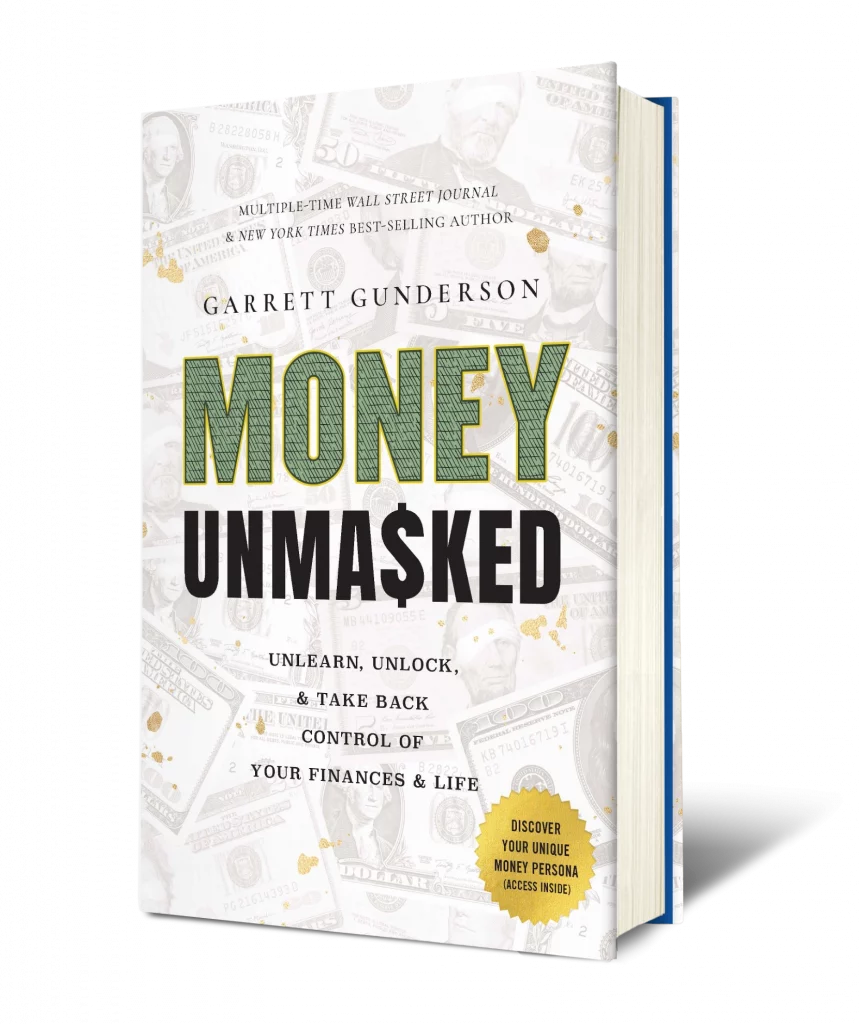
Money Unmasked
Get the free audiobook and reframe the money patterns driving your decisions.

Killing Sacred Cows
Get the free book and break the financial myths that quietly keep entrepreneurs stuck.