
Why You Keep Putting Off Your Finances (It’s Not What You Think)
Financial procrastination is quietly expensive. That insurance review you’ve been meaning to do? The tax strategy conversation you keep pushing to next month? The loan restructuring that’s been on your list since last year? Every Monday you tell yourself, “This is the week.” Every Friday, it’s still there.
Here’s the thing most people won’t tell you: your financial procrastination isn’t a character flaw. It’s a signal.
I’ve spent decades working with entrepreneurs and high-income professionals, and I can tell you that the ones who procrastinate the hardest on their finances are often the smartest, most capable people in the room. That’s not a contradiction. It’s the whole point. And it’s one of the biggest Sacred Cows in personal finance — the myth that if you’re smart and successful, getting your money right should be easy.
I broke this down in a recent conversation — watch it here or keep reading for the written version:
Financial Procrastination Is a Diagnosis, Not a Disease
Most financial advice treats procrastination like a discipline problem. “Just do it.” “Stop making excuses.” “Set a budget and stick to it.”
That’s like telling someone with a broken leg to walk it off.
Financial procrastination has specific root causes, and none of them are laziness. Here are the real ones:
- Overwhelm — Too many financial decisions competing for your attention
- Lack of clarity — You don’t know what you actually want from your money
- Diminished confidence — Past mistakes made you second-guess yourself
- Escapism — Work, Netflix, cleaning the garage… anything to avoid the uncomfortable conversation
Notice what’s missing from that list? Laziness. Stupidity. Irresponsibility. Those aren’t on there because they’re not the problem. The problem is that you’re trying to solve a structural issue with willpower — and willpower always runs out.
The Real Reason You Procrastinate Your Finances
Dan Sullivan, one of the sharpest minds in entrepreneurial coaching, taught me something that changed how I think about procrastination forever. He breaks down every activity into four levels:
- Incompetent — You don’t know how to do it
- Competent — You can do it, but it drains you
- Excellent — You’re great at it, but it’s still not your thing
- Unique — This is what you were born to do, and it gives you energy
Here’s the rule: you will always procrastinate what drains your energy. Always. And you will never procrastinate what lights you up.
Think about that for a second. Nobody has to coerce you into doing the work you love. You don’t procrastinate date night or your favorite hobby. You procrastinate the things that feel like they belong to someone else’s life.
So when you keep putting off that conversation with your CPA, or keep “meaning to” review your insurance, or can’t bring yourself to look at your cash flow numbers — it’s not because you’re bad with money. It’s because the task is sitting in the wrong zone.
The Calendar Audit: A 30-Day Financial Procrastination Fix
I tell every business owner I work with to do this. It’s simple. It’s free. And it will show you exactly where your financial energy is leaking.
For 30 days, at the end of each day, answer three questions:
- What did I do today that I didn’t need to do?
- What did I do today that I could have delegated?
- What did I do today that I want to do more of?
Then mark every activity with one of three symbols:
- Arrow up — It increased your energy
- Arrow down — It drained your energy
- Equal sign — Neutral
After 30 days, the pattern screams at you. You’ll see exactly which financial tasks you’ve been avoiding and why. Some of those tasks need to be delegated. Some need to be eliminated entirely. And a few — the ones that actually move the needle — need to be scheduled with a start time, an end time, and a description of what “done” looks like.
That last part matters. Don’t write “review finances” on your calendar. Write: “By 10:30 a.m., I have clarity on which loan to restructure first.” Frame it as an accomplishment, not a task. Accomplishments pull you forward. Tasks weigh you down.
Free Training Details the Exact Wealth Operating System I Used… That You Can Use To Find Financial Freedom In Years, Not Decades
The Format of Flow: Stop Making To-Do Lists
Here’s something that shocks people: I don’t do to-do lists.
A to-do list is an endless supply of things you think you have to do without any context or priority. It destroys flow. It creates the illusion of productivity while actually feeding procrastination.
Instead, I use what I call the Format of Flow. Every financial decision in your life fits into one of four buckets:
1. Doing Now — Getting done in the next two weeks. It lives in your calendar with a start time and end time. Not “someday.” Not “this month.” Tuesday at 9:15 a.m.
Here’s why this works. I once had an entire Friday blocked to prepare for a symposium. Know what I did that Friday? Everything except prepare for the symposium. I had the whole day, so I burned it. Then Tuesday came around, and the only open slot was 90 minutes. I finished the whole thing in 80 minutes. Parkinson’s Law is real — work expands to fill the time available. Give it a container or it’ll take everything.
2. Never Doing — Permanently eliminated. This is the one nobody talks about. Not enough people go through their calendar and ask: “What no longer represents who I am?” That insurance product you keep meaning to research? If it’s been on your list for six months, maybe it’s a “never doing.” That side investment someone pitched you? If it doesn’t align with your five objectives, it’s a “never doing.” Kill it and free up the mental bandwidth.
3. Doing Later — Happening within 3 months, but not in the calendar yet. It lives in a capture system you revisit weekly. Every week, you ask: “Is it time to move this from ‘doing later’ to ‘doing now’?”
4. The Parking Lot — Dreams with no constraints. This is where the big ideas go — the ones that might be brilliant or might be distractions. Over half the things in my parking lot never happen. And that’s the point. The parking lot prevents false starts. It lets you dream without destroying your team’s bandwidth or your own focus.
“I’ll Get to It Eventually” — And Other Expensive Lies
Let me tell you what “I’ll get to it eventually” actually costs.
I had a client — a successful business owner — who told me her job was an 8.5 out of 10 on the misery scale. “If 10 is killing me, I’m at an 8.5.” She had a business idea she was excited about but couldn’t move forward because her current work drained every drop of energy she had.
She’d been saying “I’ll get to it eventually” for years.
In 30 minutes of coaching, we built a transition plan. She had the money. It wasn’t a resource problem. It was a clarity problem disguised as a timing problem.
That’s the thing about financial procrastination — it always disguises itself as something reasonable. “I’m too busy.” “The timing isn’t right.” “I need to do more research.” These sound rational. They feel responsible. But they’re costing you real money every single day.
Some people are losing dollars by picking up pennies. They do everything themselves — the bookkeeping, the tax prep, the insurance shopping — because they think they’re saving money. But that’s Consumer thinking, not Producer thinking. A Producer asks: “What’s the highest-value use of my time right now?” Every hour spent on a task you’re incompetent or merely competent at is an hour not spent on what you’re uniquely great at. That’s not saving. That’s a leak.
The Procrastination Nobody Talks About
The biggest financial procrastination isn’t about spreadsheets or insurance policies. It’s about conversations.
People procrastinate confrontation. They procrastinate standing for their own value. They put off the hard conversation with their business partner, the renegotiation with their advisor, the honest talk with their spouse about money.
I’ve been this person. When I was running Wealth Factory, I had a team of eight coaches and a growing company. But I was people-pleasing instead of leading. Instead of having the hard conversations when issues came up, I mediated. I managed feelings. I swept things under the rug. I told myself I’d deal with it “when the time was right.” The time was never right. Over the years, those avoided conversations compounded until the business I’d built from scratch no longer felt like mine. I eventually sold it — not because I wanted to, but because I’d procrastinated the leadership decisions that could have saved it.
Here’s the philosophy that changed everything for me: Do the hard things now, and you’ll have an easier life later. That “hard conversation” about financial coordination with your team? It takes 30 minutes. The cost of not having it compounds for years.
It’s like weeds in a garden. Easy to pull one. But if you keep saying “I’ll get to it,” you won’t have a garden anymore.
Purpose Beats Procrastination Every Time
There’s a study by Shirley Blotnik that tracked about 1,500 people over 20 years. Some chose to pursue profit first, then purpose. Others chose purpose first, then figured out the profit. Of the 101 people who became millionaires in the study, 99 of them pursued purpose first.
That’s not a coincidence. When you’re chasing money with no purpose behind it, you drain your energy. You lose the will to push through the boring stuff. You procrastinate because there’s no deeper reason to stay in the game.
But when you’re clear about what you want — not what sounds good to other people, not what you think you should want, but what you actually want — procrastination fades. You don’t procrastinate your favorite thing to do. You don’t procrastinate great things. You procrastinate the things you said yes to when you meant no.
And that might be the most important financial decision you ever make: learning to say no to good things so you can say yes to great things — the things aligned with your Soul Purpose.
Three Things to Do This Week
If you’ve been putting off your financial life, here’s where to start — not “someday,” but this week:
- Run the Calendar Audit. Tonight, before you close your laptop, write down every activity from today. Mark each one: energy up, energy down, or neutral. Do this for 30 days. You’ll find the leaks.
- Pick one “Never Doing.” Look at your financial to-do list and find the item that’s been there longest. If it’s been 90+ days and you haven’t done it, ask yourself: “Is this really mine to do? Or is it time to delegate, eliminate, or admit it’s not aligned with who I am?”
- Schedule one financial conversation. Not “sometime.” Put it in your calendar with a start time and end time. Frame it as an accomplishment: “By 11:00 a.m. Thursday, I have a plan for restructuring my highest-cost loan.” Then do it.
This is what Win Then Play looks like in practice. Define your win — the three to five financial objectives that actually matter this quarter. Put them in your calendar. Say no to everything else. And watch how quickly the procrastination disappears when every task on your list is something you chose instead of something you inherited.
Focus builds wealth. Distraction destroys it. And procrastination is just distraction wearing a suit.
Ready to Stop Guessing With Your Money?
Most financial advice tells you to save more and spend less. That’s a losing game. Garrett’s free book Killing Sacred Cows reveals why the conventional wisdom is costing you—and what to do instead.
Do it yourself? Try the free Procrastination Decoder tool on X1 Wealth.
In prosperity,
Garrett
Ready to Build Your Life of Financial Freedom?
Most entrepreneurs are either trying to do everything alone or working with disconnected advisors who don’t talk to each other. Without coordination, your mental capital stays trapped. Your relationship capital stays untapped. And money keeps slipping through the cracks.
This isn’t traditional financial planning. It’s not about locking money away or chasing net worth. It’s about being financially fit, independent, and free. Building mental capital through expert guidance. Multiplying relationship capital with a vetted community of entrepreneurs. Creating cash flow that supports life today while building for tomorrow.
If you’re a business owner generating about $350,000+ per year and want direct support building your own family-office strategy, apply here for your personalized Report of Findings.

Frequently Asked Questions
Why do I keep putting off important financial decisions?
Financial procrastination usually stems from overwhelm, lack of clarity about what you want, diminished confidence from past mistakes, or escapism. It’s rarely about laziness. When financial tasks sit in your “incompetent” or “competent” zone — meaning they drain your energy — your brain naturally avoids them. The fix isn’t more discipline. It’s identifying which tasks to delegate, eliminate, or schedule with clear time boundaries.
How does procrastination affect your finances long-term?
Every day you delay a financial decision, the cost compounds. Unfixed tax inefficiencies, unreviewed insurance policies, and unstructured debt silently erode your cash flow. Over years, financial procrastination can cost tens or even hundreds of thousands of dollars in leaked wealth — money that was always yours but slipped through the cracks because you kept saying “I’ll get to it eventually.”
What is the best way to stop procrastinating on money?
Start with a 30-day Calendar Audit. Track every financial activity and mark whether it increased, decreased, or was neutral to your energy. Then sort tasks into four categories: Doing Now (calendar it with a start and end time), Never Doing (eliminate permanently), Doing Later (within 3 months but not scheduled yet), and the Parking Lot (big ideas with no time constraint). This gives you structure without the overwhelm of a to-do list.
Is financial procrastination a sign of something deeper?
Often, yes. Financial procrastination can signal that you’re doing work that doesn’t align with your purpose, saying yes to obligations that don’t match your values, or avoiding confrontation about money in your relationships. When you get clear about what you actually want — not what sounds impressive or what someone else expects — the procrastination often resolves on its own because you’re finally working toward something that matters to you.
More Free Resources
If you want to keep building momentum, start with one of these free book resources:
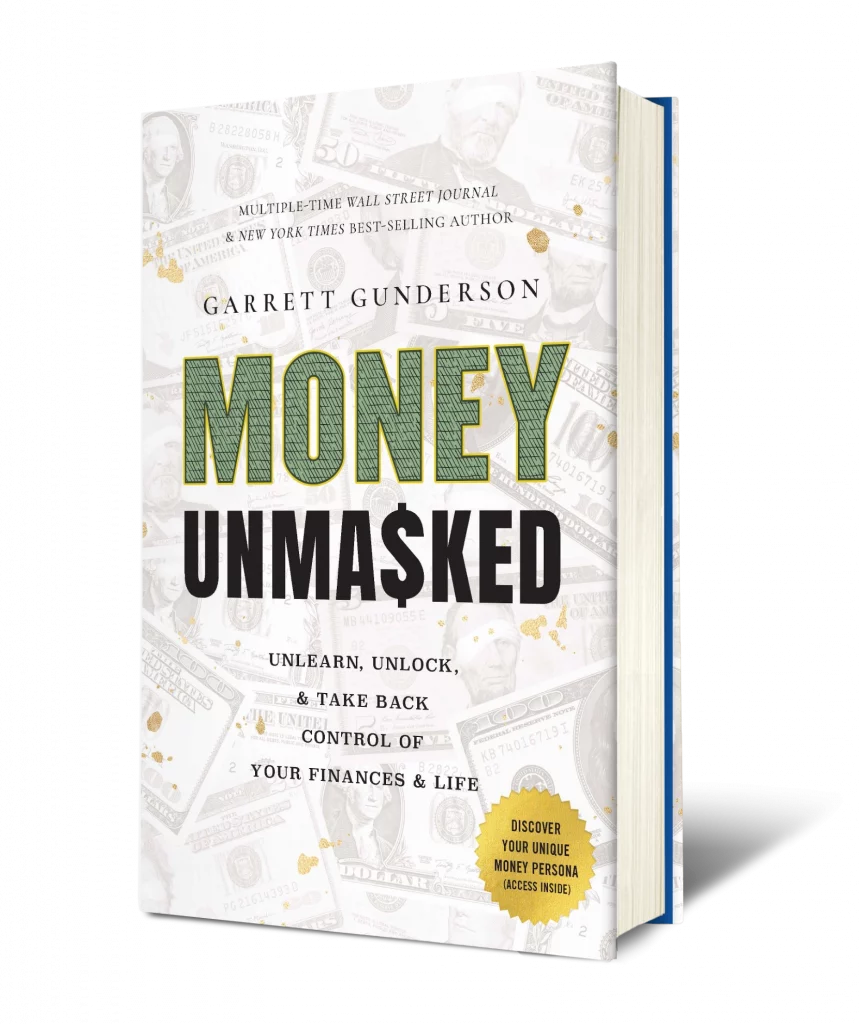
Money Unmasked
Get the free audiobook and reframe the money patterns driving your decisions.

Killing Sacred Cows
Get the free book and break the financial myths that quietly keep entrepreneurs stuck.