
I broke this down in a recent video — watch it here or keep reading for the full written breakdown.
You already know the answer, even if nobody’s said it out loud to you yet.
Do millionaires budget?
The ones who stay millionaires don’t. Budgeting is a tool of the not wealthy.
It was designed for a world where the goal was to NOT run out… instead of building more.
And if you’ve been earning well but still feel like your money disappears every month, a tighter budget isn’t going to fix that.
What you’re missing isn’t discipline. It’s a system.
I grew up in a coal mining town in Utah, watching my dad stretch every dollar like it was the last one.
He was a fourth-generation miner. His father worked the mines. And his grandfather before that.
My dad budgeted everything. $1,400 a month for a family, and he knew where every penny went.
And guess what… he never got ahead. Not because he wasn’t smart or disciplined, but because you can’t shrink your way to wealth.
No spreadsheet in the world creates more money. It just rearranges the money you already have.
So what do the wealthy actually do? They build what I call a Command Center.
A budget says “don’t spend.” A Command Center says “know where it goes.”
Here’s the difference, and it matters more than you might think.
A budget is a restriction tool. You set limits. You feel guilty when you go over. You fight with your spouse about the grocery line.
It’s built around scarcity, the assumption that there isn’t enough, so you’d better clamp down.
A Command Center is the opposite. It’s a visibility tool. You know where every dollar flows, in and out, without restricting a thing.
You’re not asking “Can I afford this?” You’re asking “Is this the best use of this dollar, given what I know about my cost of money?”
That’s a completely different question.
When I was twenty-two and broke, I ate at Applebee’s. I budgeted for it.
As my income grew, I stopped eating at Applebee’s. Not because some spreadsheet told me I could, but because I was producing more value and my quality of life naturally ratcheted up with it. You don’t budget your way to fine dining. You earn your way there by becoming more valuable.
The takeaway is to start tracking where your money actually goes, and whether each dollar is working as hard as you are.
If you want to see this in action, take the free Money Snapshot. It maps your cash flow and monthly expenses in about five minutes (I’m not a spreadsheet guy, so no spreadsheet gymnastics required).
Your Cost of Money: the number nobody taught you
Here’s a framework that will change how you think about every financial decision you make. It’s called the Cost of Money.
Your Cost of Money is one number:
- The highest rate you can reliably earn on your money,
- OR the highest rate you’re currently paying on a debt.
Whichever is greater.
Say you can earn 8% putting money back into your business. That’s your Cost of Money.
So… every dollar sitting in a checking account earning 0.5% is costing you 7.5%.
Every dollar trapped in home equity earning 0% is costing you 8%.
Now flip it.
If you’re carrying a balance on a credit card at 22% and your best investment returns 8%, your Cost of Money is 22%.
Every dollar that doesn’t go toward that card is costing you 22%.
This is why billionaires borrow money even when they have cash. Their Cost of Money is high. They can put capital to work at 15%, 20%, or more. Paying cash for something means giving up that return. So they borrow at 5% and put the rest to work at 20%.
That’s not reckless borrowing… it’s smart math.
Here’s an example: You have $50,000 in savings earning 4%.
You also have a mortgage at 3.5%.
Should you pay off the mortgage?
Traditional budgeting advice screams yes. But your Cost of Money says no. You’re earning more than you’re paying. Keeping liquidity and access to that capital is worth more than the psychological comfort of a paid-off house.
But here’s the part most finance people won’t tell you: peace of mind is a real input.
If carrying a mortgage keeps you up at night and kills your creativity, that has a cost too. The point isn’t to be a robot. It’s to make the decision with real numbers instead of slogans.
Free Training Details the Exact Wealth Operating System I Used… That You Can Use To Find Financial Freedom In Years, Not Decades
The 4 I’s: where your money is actually leaking
Before you try to earn more, fix the holes in the bucket. I call these the 4 I’s of Efficiency, four places money quietly drains out of your life. (I wrote more about this in Stop 8 Hidden Wealth Leaks Through Coordination.)
1. IRS (Taxes)
Taxes are your single biggest lifetime expense. Not your mortgage. Not your kids’ college. Taxes. Most people pay more than they have to because their CPA is reactive, not strategic. (If that sounds familiar, read Stop Tipping the Government.)
Here’s a quick math check that should bother you.
If you’re in a 30% combined tax bracket, $3,000 of every $10,000 you earn goes to the government before you touch it.
That’s the price of not having a coordinated team dialing in your taxes for you.
And that old chestnut about being in a “lower tax bracket in retirement”?
Run the numbers. With $38 trillion in national debt and climbing, do you really think tax rates are going down?
Inflation goes up. Government spending goes up. To me, the math points one direction… up (or the same).
2. Interest (Debt Structure)
Not all debt is created equal.
A $50,000 loan with a $1,000 monthly payment has a Cash Flow Index of 50. That’s the danger zone, eating your cash flow alive.
A $200,000 mortgage with a $900 payment has a Cash Flow Index of 222. That’s the freedom zone.
Same “debt,” completely different impact on your life.
The first loan to pay off isn’t the one with the highest rate. It’s the one with the lowest Cash Flow Index, the loan that frees up the most monthly cash flow per dollar you spend paying it down.
3. Investments (Fees and Underperformance)
How much are you paying in management fees on money you can’t even access?
A 1% annual fee on a 401k doesn’t sound like much until you realize it compounds against you for 30 years. It can eat a third of your total growth.
And let’s be real… your 401k isn’t savings. You can’t touch it without getting taxed and penalized. You don’t control what it’s invested in. True savings means liquid, accessible, and penalty-free. Money you can get to tomorrow if you need it. Know the difference.
4. Insurance (Overpaying or Gaps)
Most people are either paying too much for coverage you don’t need, or have gaps that could wipe you out.
It doesn’t take much to get second opinion on your insurance portfolio, and it could make a massive difference in both your cashflow and your coverage.
The lesson: Run the 4 I’s audit before you try to earn another dollar. Most people are leaking 10-20% of their income through these four holes. Fix the leaks first, and you’ve given yourself a raise without working harder.
Want the 4 I’s run for you? Take the free Financial Health Score. It benchmarks your taxes, debt, investments, and insurance in about 12 minutes and gives you a 90-day plan. Most people find $8,000-$15,000 in money they’re currently losing.
“But Garrett, Dave Ramsey says everyone should budget.”
Fair question. And look, Dave Ramsey’s heart is in the right place. He’s helped a lot of people stop digging the hole. If you’re drowning in credit card debt and can’t make rent, his advice works. I’m not here to trash the man.
But his ceiling is your floor.
The “debt-free scream” crowd teaches you to cut the latte, pay off every loan, and live on rice and beans until you’re 65. That’s a survival plan. It’s not a wealth plan. And at some point, the discipline of restriction turns into the habit of sacrifice. That habit doesn’t know when to stop.
There are three ways to live within your means:
Option 1: Budget. Track every penny. Set limits. Cut expenses. This works if your goal is to not go broke. It will not make you wealthy. I’ve never met a millionaire who got there by canceling subscriptions and bringing lunch from home.
Option 2: Be Efficient. This is the 4 I’s. Plug the leaks. Restructure your debt. Fix your tax strategy. Renegotiate your insurance. You keep your lifestyle, but you stop bleeding money in places you didn’t even know existed.
Option 3: Expand. Create more value. Invest in your skills. Build relationships that open doors. Increase your income by becoming worth more in the marketplace.
The wealthy focus on Options 2 and 3. They don’t spend energy restricting. They spend energy producing.
And here’s the part that matters for you personally: if you’re earning $200,000+ and still feel strapped, a budget isn’t your problem. Your money is flowing to the wrong places. You need a Command Center, not a spreadsheet with color-coded categories.
Build your Command Center this week
You don’t need to overhaul your entire financial life this afternoon. But you can take three steps right now that most millionaires took years ago.
Step 1: Map your cash flow. Not a budget. A map. Where does every dollar come from, and where does every dollar go? The free Money Snapshot tool does this in minutes.
Step 2: Calculate your Cost of Money. What’s the highest rate you’re reliably earning? What’s the highest rate you’re paying? That gap tells you where your next dollar should go.
Step 3: Run the 4 I’s audit. Look at your taxes, interest payments, investment fees, and insurance coverage. Pick the one with the biggest leak and fix it first.
This isn’t about restriction. It’s about intelligence. The wealthy don’t spend less. They spend smarter, earn more, and know exactly where their money sits at all times.
My dad was the hardest-working man I ever knew. He budgeted every dollar from every paycheck that came out of the coal mines in Utah. Raised a family on a miner’s wage. And he taught me something priceless. Not that budgeting works, but that it has a ceiling. At some point, you stop cutting and start building.
That’s the shift. From consumer to producer. From restriction to expansion. From budget to Command Center.
You don’t need permission to stop budgeting. You just need a better system.
Ready to Stop Guessing With Your Money?
Most financial advice tells you to save more and spend less. That’s a losing game. Garrett’s free book Killing Sacred Cows reveals why the conventional wisdom is costing you—and what to do instead.
Do it yourself? Try the free Money Snapshot on X1 Wealth.
In prosperity,
Garrett
Ready to Build Your Life of Financial Freedom?
Most entrepreneurs are either trying to do everything alone or working with disconnected advisors who don’t talk to each other. Without coordination, your mental capital stays trapped. Your relationship capital stays untapped. And money keeps slipping through the cracks.
This isn’t traditional financial planning. It’s not about locking money away or chasing net worth. It’s about being financially fit, independent, and free. Building mental capital through expert guidance. Multiplying relationship capital with a vetted community of entrepreneurs. Creating cash flow that supports life today while building for tomorrow.
If you’re a business owner generating about $350,000+ per year and want direct support building your own family-office strategy, apply here for your personalized Report of Findings.

Frequently Asked Questions
What do millionaires use instead of a budget?
Most millionaires use what Garrett Gunderson calls a “Command Center” — a system that tracks where every dollar flows without restricting spending. Instead of setting limits, they focus on visibility, efficiency (plugging leaks in taxes, debt, investments, and insurance), and expanding their income through value creation.
Is budgeting a waste of time if you earn a high income?
Not entirely — budgeting can help you stop the bleeding if you’re in a financial crisis. But for high earners ($200K+), the return on budgeting is minimal compared to restructuring your taxes, debt, and insurance. The 4 I’s of Efficiency (IRS, Interest, Investments, Insurance) typically recover 10-20% of income that a budget would never find.
What is the Cost of Money framework?
Your Cost of Money is the highest rate you can reliably earn on your capital, or the highest interest rate you’re currently paying — whichever is greater. This single number helps you decide where every dollar should go. For example, if you earn 8% in your business, every dollar sitting idle is costing you 8%.
How do rich people manage their money day to day?
Wealthy people typically work with a coordinated financial team (or build their own “Command Center”) that handles cash flow tracking, tax strategy, debt structure, and insurance optimization. They focus on making their money work harder — not on spending less. Many use tools like the Cash Flow Index to prioritize which debts to eliminate first based on cash flow impact, not interest rate.
More Free Resources
If you want to keep building momentum, start with one of these free book resources:
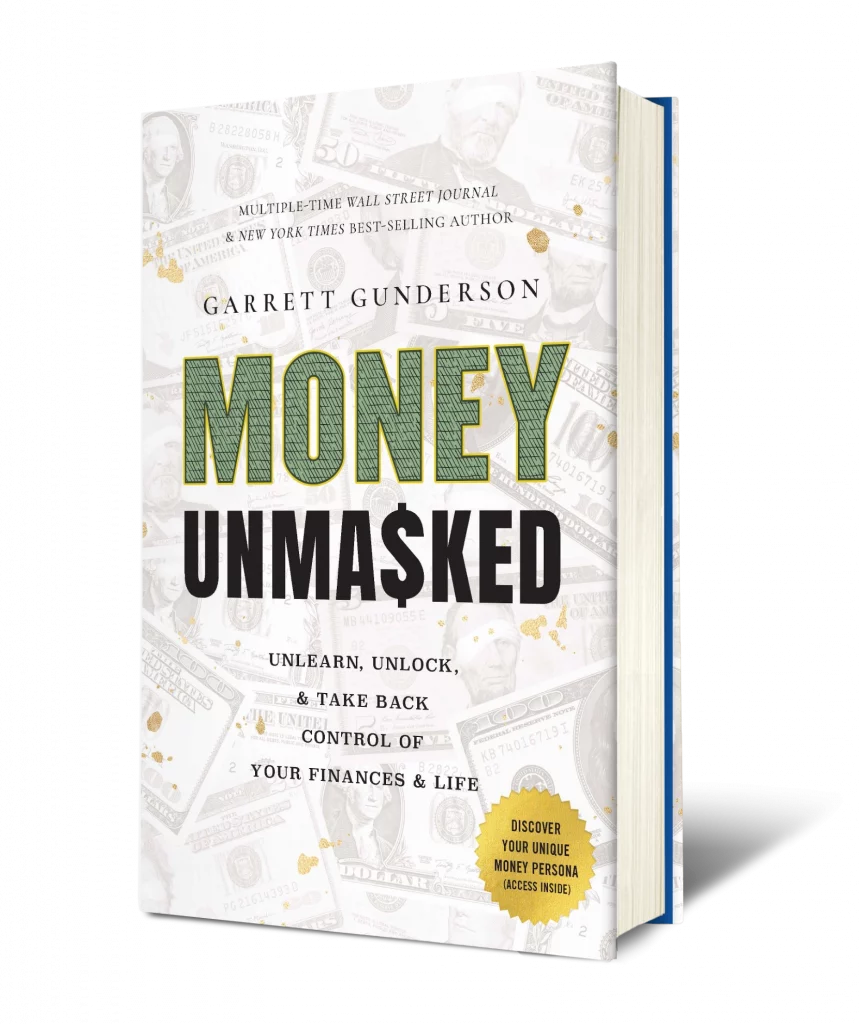
Money Unmasked
Get the free audiobook and reframe the money patterns driving your decisions.

Killing Sacred Cows
Get the free book and break the financial myths that quietly keep entrepreneurs stuck.