
Relationship Currency: The Wealth Asset Nobody Taught You to Build
A guy once ran up to me after a speech in front of 900 people. Grabbed my arm. Said, “I need to raise $20 million. Can you help me?”
I’d never met him. Didn’t know his name. He didn’t know mine beyond whatever the emcee said 45 minutes earlier. And here he was, asking me to open my entire Rolodex for a stranger.
That’s not networking. That’s walking into a bank on your first day and demanding a thousand bucks from an account with a zero balance.
And it’s the same mistake almost everyone makes with relationships: trying to withdraw before they’ve ever made a deposit.
Here’s what I’ve learned after 20+ years of building a life and a business around real connections: your relationships are not a path to wealth. They ARE wealth. And they compound — just like money does — if you treat them right.
I broke this topic down in a recent conversation with Wes — watch above or keep reading for the written version.
The Value Equation: Where Real Wealth Comes From
Most people think wealth starts with money. Get the money, and everything else follows. But that’s backwards.
Here’s the formula I’ve tested in my own life and taught to thousands of business owners:
Mental Capital x Relationship Capital = Financial Capital
Mental Capital is your knowledge, your skills, your judgment under pressure. It’s the frameworks you’ve built from experience, the scar tissue from mistakes, the lessons you can’t unlearn.
Relationship Capital is trust. Shared values. The history of showing up for people. It’s not how many contacts are in your phone — it’s how many of those people would pick up when you call.
When you multiply those two together — when you combine what you know with who knows you and trusts you — financial capital shows up. Not as a miracle. As a natural consequence.
Here’s the worked example from my own life. When I was starting out, I didn’t have money to join a $25,000 mastermind. But I had Mental Capital — I knew one financial strategy cold. And I had Relationship Capital — I knew people who’d benefit from the mastermind. So I sent referrals. Those referrals loved the group and joined. The mastermind gave me credits. I got in. Zero dollars spent. Full value received.
That’s not a hack. That’s the Value Equation working exactly as designed.
You can be brilliant and broke if you never share, package, or communicate what you know. You can be popular and struggling if you bring nothing meaningful to the table. You need both sides of the equation.
The Relationship Bank Account (And Why Yours Might Be Overdrawn)
Think of every relationship you have as a bank account.
When you open a new account, the balance is zero. You can’t walk in on day one and ask for a withdrawal. The teller would laugh. So why do people think relationships work differently?
Deposits first. Always.
And deposits come in more forms than money. When I met Joe Polish — one of the best connectors in the world — he didn’t ask me for anything. He just started making introductions. “You need to meet John Butcher. He’s awesome.” “You need to meet Alex — Alex helped me sell a thousand books.” Deposit, deposit, deposit. By the time Joe said, “Hey, I’m coming to Utah,” my response was instant: “I’ve got a place for you to stay. What else do you need?”
That’s what a healthy relationship account looks like. The balance was already there.
Now compare that to the $20 million guy. His account was at zero. He tried to make a withdrawal the size of a small country’s GDP. The relationship bounced. It felt needy, like someone asking you to marry them on the first date.
The rule is simple: make deposits before you make withdrawals.
So what counts as a deposit? More than you think:
- A testimonial for someone whose work you respect
- Buying and handing out a friend’s book when it comes out
- Making an introduction that helps both people
- Showing up consistently — commenting, supporting, being present
- Offering your skill for free to show what you can do
None of those require money. Every single one builds your account balance. (Not sure where you stand? The free Relationship Currency tool takes two minutes and shows you exactly where to focus.)
How I Built a $25,000 Speech from a Bathroom Conversation
I met Dan Sullivan — founder of Strategic Coach, the biggest entrepreneurial coaching program on the planet — in a bathroom. I’m serious. We were at an event, and I happened to be washing my hands next to him.
I didn’t pitch him. I didn’t ask for anything. I said, “Hey Dan, I’m in your Strategic Coach program. I listen to all your stuff. Would love to get a chance to hang out and talk sometime.” He said, “Great, come have lunch with me.”
Too many people crowded the lunch table, so I called his office later. Got a meeting in Chicago. But here’s what I did before that meeting: I figured out Dan’s currency. Not money — referrals. Dan loves coaching. He loves growing his program.
So I asked him, “What if we hosted an event and introduced people to Strategic Coach?” We had 170 people show up. A bunch of them signed up. I’d made so many deposits that the relationship went from bathroom encounter to genuine friendship.
And here’s where the Value Equation kicks in again. At some point, I said to myself, “I want to charge $25,000 for a speech.” At the moment I thought that, I was nowhere near delivering a speech worth $25K. But because of the relationships I’d built, I could get resourceful. I hired Michael Port and we created a theatrical keynote. Jeremy Finley did the music. AJ Harper did the screenplay. Roberto was a phenomenal speaking coach, Jonathan Sprinkles and Larry Moss helped with performance, Jean Louie worked on movement.
All of a sudden, $25,000 seemed like a bargain for what we’d built together. And it started with a conversation at a sink.
“But Networking Feels Sleazy” — Here’s Why You’re Thinking About It Wrong
I hear this all the time. “I hate networking. It feels fake. I don’t want to use people.”
Good. You shouldn’t want to use people. If your motivation for building relationships is manipulation, people will smell it. And they should run.
But here’s the distinction most people miss: there’s a massive difference between being transactional and being a value creator.
Transactional people keep score. They calculate every conversation: “What can I get from this person?” That’s the networking that feels gross. Because it is gross.
Value creators ask a different question: “How can I add something to this person’s life?” They support. They introduce. They buy the book. They leave the testimonial. They show up. And they do it without an invoice attached.
As Stephen Covey put it: be interested more than interesting.
Think about the last time someone you barely knew tried to impress you by talking about themselves for 20 minutes straight. How did that feel? Exhausting. Now think about the last person who asked you genuine questions, remembered what you said, and followed up. Which one would you pick up the phone for?
The currency of relationships isn’t charm. It’s curiosity. And curiosity costs nothing.
The Catalyst Strategy: How to Build Relationship Capital When You’re Starting From Zero
When I was a coal mining kid from Utah with no connections and no money, I didn’t have a trust fund or a famous last name. I had to build every relationship from scratch. Here’s the strategy that changed everything.
I call them Catalysts.
A Catalyst is someone who is already a connector — a mover, a visionary, someone whose circle overlaps with where you want to be. You don’t need a hundred of them. You need five.
Here’s what I did: I found five Catalysts and said, “I’m happy to help you with a few things on your finances, just to show you what I can do. No charge. I think it would be great for our relationship.”
One of those five was Patrick Gentempo. I helped him with some financial strategies. He was blown away. He asked to interview me. Then he invited me to speak at his event. Then another event. Then he started introducing me to his community. Over the last decade-plus, Patrick has introduced me to thousands of people. That relationship started with me adding value to him — with zero dollars spent.
That’s the play. Find someone who’s already connected. Pour into them. Add genuine value. Let the relationship do what healthy relationships do: compound.
And here’s the part that trips people up: you don’t need money to make deposits. You can be an intern. You can offer your time. You can promote their work. You can connect them with someone they should know. You can be so good at one thing that it opens doors nobody expected.
When I was 20, I learned one financial strategy — just one — and I went deep. Watched VHS tapes on it, read everything, interviewed people who used it. Then I approached a guy who managed $5 billion in bond funds and told him about this one strategy. That conversation made me six figures. I didn’t need to know everything about everything. I needed to know one thing nobody else in the room knew.
Finding Someone’s Currency (Hint: It’s Rarely Money)
Here’s a secret that took me years to learn: money is just one currency.
Some people’s currency is acknowledgment. They want to feel seen and appreciated for their work. Others value flexibility — the ability to make their kid’s baseball game. Some people are driven by purpose — they want to be part of something bigger than themselves. And yes, some people’s primary currency is financial.
The way to figure out someone’s currency isn’t by running a survey. It’s by asking questions and listening. Not “Hey, let’s sit down and figure out your currency” — that’s weird. But natural conversation: What excites you? What’s your biggest obstacle? If you had more time, what would you do with it? What’s the project you can’t stop thinking about?
When I figured out Dan Sullivan’s currency was referrals, I hosted an event that brought him 170 potential clients. When I noticed that my buddy Roberto thrived on connection and acknowledgment, I referred him hundreds of people over the years. Roberto became the top speaking coach in chiropractic — 1,500 new patients a month enter practices because of his training. He once introduced me to a room by saying, “The two people who made the biggest difference in my life were Garrett Gunderson and Tony Robbins. And Garrett made the most difference.”
That didn’t happen because I had a networking strategy. It happened because I paid attention to what mattered to him and poured into it.
Here’s an easy test for your own relationships. I call it the Phone Call Test: when someone’s name pops up on your phone, do you want to pick up? If yes, that’s someone you’ll probably refer, support, and go to bat for. If you cringe, that’s a signal. And the question to ask yourself is: when your name pops up on their phone, are they picking up?
The Myth That Blocks Your Relationship Currency
There’s a myth I’ve been fighting for two decades. It goes like this: “It takes money to make money.”
No, it doesn’t. It takes value to make money. And the fastest path to value runs straight through your relationships.
When they say “it takes money to make money,” what they actually mean is: it takes YOUR money for THEM to make money. That’s the financial industry’s favorite line because it keeps you handing over control.
But look at the evidence. I didn’t come from money. I grew up in a coal mining family. When I was starting my first business, I couldn’t afford coaches. So I offered to work out with a professor who was a financial mogul before teaching. He’d train with me, and then we’d sit down and I’d learn from him. Cost to me: one hour of exercise I was going to do anyway.
When I couldn’t afford Joe Polish’s $25,000 mastermind — because I’d just spent everything launching Killing Sacred Cows — I sent him referrals instead. They joined his group. He gave me credits. I found my way in.
You don’t start with your bank account. You start with your resourcefulness. Your ideas. Your knowledge. Your willingness to show up. That’s the best investment you can make — investing in yourself and the people around you.
The people who say “I don’t have the money” or “I don’t have the time” are telling themselves a money story that keeps them stuck. I see how many hours people spend on their phones every day. I see the Netflix queue. The time exists. The question is whether you’ll spend it scrolling or building something that compounds.
Your Move: Start Depositing Today
Relationship Currency isn’t a theory. It’s the most practical wealth strategy I know. And you can start building it today, right now, with zero dollars and zero special connections.
Here’s where to start:
- Pick one person whose work you respect. Leave them a genuine, specific testimonial or review this week. Not “great job!” — something that shows you actually paid attention.
- Identify your one deep skill. What’s the one thing you know better than most people in your circle? That’s your deposit currency. Lead with it.
- Find your first Catalyst. Who in your life is already a connector? What’s one thing you could do for them — no strings, no invoice?
- Run the Phone Call Test. Scroll through your contacts. Who would pick up when you call? That’s your relationship net worth. If the list is short, you know where to focus.
- Audit your calendar. Does it tell the story of who you want to become? If it’s all heads-down task work and no relationship building, something has to shift.
Remember: all it takes is one person. One mentor. One connection. One relationship. You’re one person or one idea away from a new level of prosperity. But that person isn’t going to fall into your lap while you’re watching Netflix.
This is Win Then Play applied to relationships. Win the trust. Win the deposit. Win the mutual respect. Then the opportunities play out in ways you couldn’t have scripted. Wealth is built through conversation. Always has been. Always will be. The question is whether you’re having the right ones.
I send one money move a week to my email list — the kind of stuff your financial advisor won’t tell you. Join here and get the free book while you’re at it.
Ready to Stop Guessing With Your Money?
Most financial advice tells you to save more and spend less. That’s a losing game. Garrett’s free book Killing Sacred Cows reveals why the conventional wisdom is costing you—and what to do instead.
Do it yourself? Try the free Relationship Currency tool on X1 Wealth.
In prosperity,
Garrett
Ready to Build Your Life of Financial Freedom?
Most entrepreneurs are either trying to do everything alone or working with disconnected advisors who don’t talk to each other. Without coordination, your mental capital stays trapped. Your relationship capital stays untapped. And money keeps slipping through the cracks.
This isn’t traditional financial planning. It’s not about locking money away or chasing net worth. It’s about being financially fit, independent, and free. Building mental capital through expert guidance. Multiplying relationship capital with a vetted community of entrepreneurs. Creating cash flow that supports life today while building for tomorrow.
If you’re a business owner generating about $350,000+ per year and want direct support building your own family-office strategy, apply here for your personalized Report of Findings.

Frequently Asked Questions
How do I build relationship capital when I have nothing to offer?
You always have something to offer. Curiosity, genuine interest, a willingness to support someone’s work, a specific skill you’ve gone deep on, or simply the ability to make an introduction between two people who should know each other. You don’t need money to make deposits. The most valuable deposit is often your time and attention.
What’s the difference between relationship currency and networking?
Networking is typically transactional — you collect business cards and hope someone can do something for you. Relationship currency is about genuine value creation. You focus on making deposits (support, introductions, advocacy) before ever making a withdrawal. The goal isn’t to “know people” but to be someone worth knowing.
How does the Value Equation (Mental Capital x Relationship Capital = Financial Capital) work in practice?
Your Mental Capital is your knowledge, skills, and experience. Your Relationship Capital is the trust you’ve built with people who respect and value what you bring. When you combine the two — sharing what you know with people who trust you — financial results follow naturally. A skilled accountant who nobody trusts stays broke. A well-connected person with no skills has nothing to deliver. You need both sides multiplied together.
Can introverts build relationship currency?
Absolutely. Building relationship currency isn’t about working a room or being the loudest person at the party. It’s about depth, not breadth. Going deep with five people beats going shallow with 500. An introvert who listens well, follows up thoughtfully, and adds genuine value will build stronger relationship capital than any extrovert collecting business cards.
More Free Resources
If you want to keep building momentum, start with one of these free book resources:
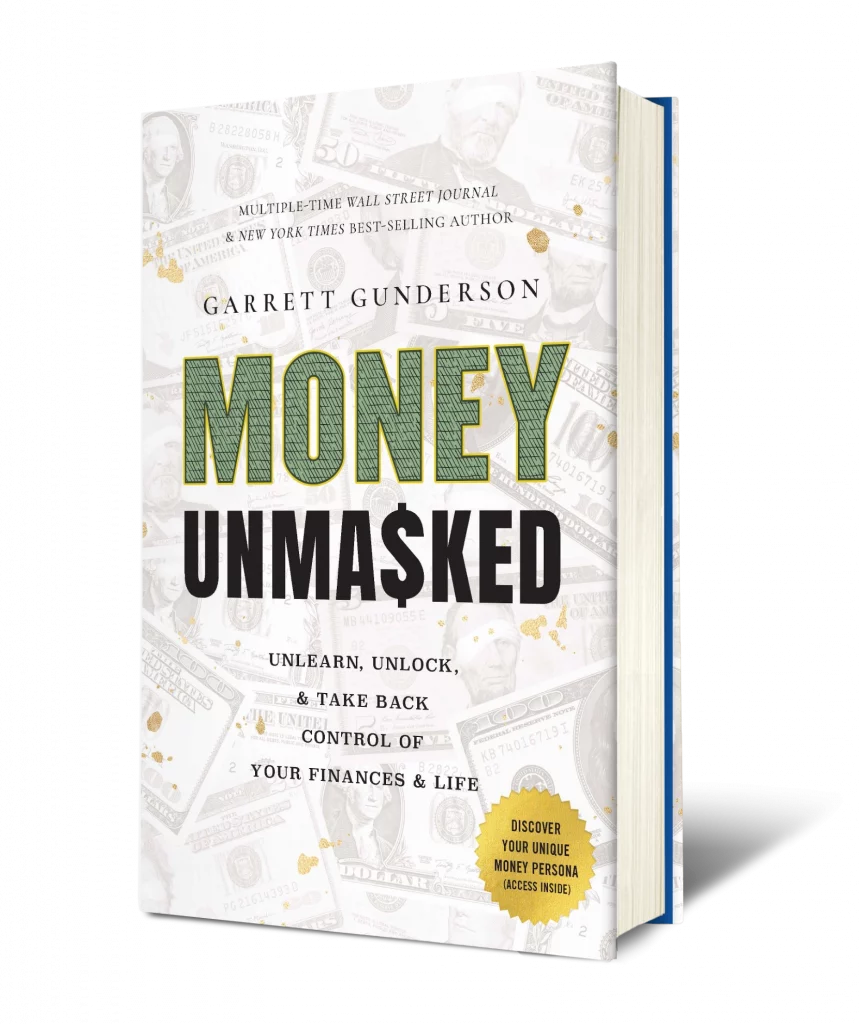
Money Unmasked
Get the free audiobook and reframe the money patterns driving your decisions.

Killing Sacred Cows
Get the free book and break the financial myths that quietly keep entrepreneurs stuck.